



Opal Gemstone: Origins, Types, and Buying Guide
What is Opal?
Opal is a unique and highly sought-after gemstone known for its captivating play-of-color, a phenomenon where vibrant hues shift and shimmer under different lighting conditions. Unlike crystalline gemstones such as diamonds or sapphires, opal is a mineraloid, meaning it lacks a structured crystal lattice. Instead, it is composed of tiny silica spheres arranged in a grid-like pattern, which diffracts light to produce its signature rainbow-like effect.
Composition and Structure
Chemical Formula: SiO₂ · nH₂O (Hydrated Silica)
Hardness: 5.5 – 6.5 on the Mohs scale
Water Content: 3% – 21% by weight
Transparency: Ranges from transparent to opaque
The presence of water within its structure makes opal a delicate gemstone, sensitive to changes in humidity and temperature. Because of this, opals require careful handling and maintenance to preserve their brilliance.
If you're interested in learning more about other gemstone varieties, check out our Comprehensive Guide to Purple Gemstones.
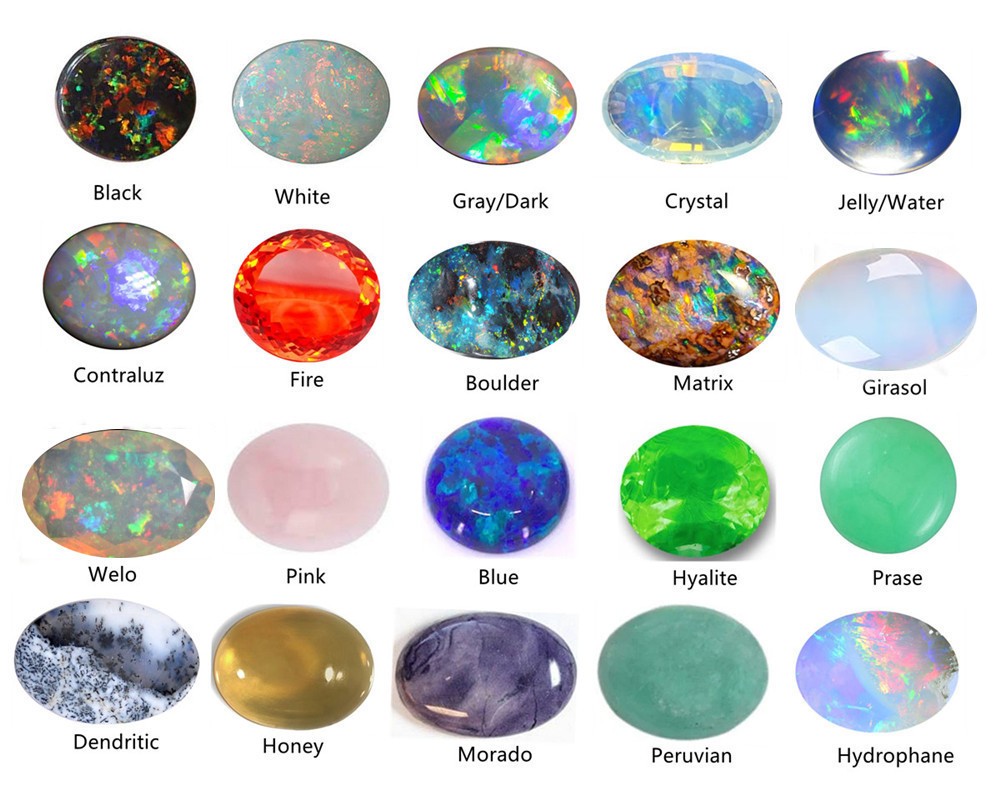
The Different Types of Opals
Opals come in various types, each with unique characteristics that influence their appearance, value, and desirability. Below is a comprehensive breakdown of the most well-known opal types:
Type | Play-of-Color | Body Tone | Key Sources | Price Range |
Black Opal | Vibrant, multi-color flashes | N1-N4 (Dark) | Australia, Ethiopia | $10 to $20,000 per carat |
White/Light Opal | Subtle to moderate flashes | N7-N9 (Light) | Australia | $10 to $6,000 per carat |
Gray/Dark Opal | Low to moderate flashes | N5-N6 (Medium Gray) | Australia | $10 to $2,000 per carat |
Crystal Opal | Bright, transparent flashes | Transparent | Brazil, Ethiopia | $2 to $6,400 per carat |
Jelly/Water Opal | Soft, ethereal flashes | Transparent/Green | Mexico, Australia | $5 to $140 per carat |
Contraluz Opal | Play-of-color visible from backlighting | Transparent | Mexico | $150 to $200 per carat |
Fire Opal | Intense red, orange, yellow hues | Red/Orange/Yellow | Mexico, Brazil | $10 to $250 per carat |
Boulder Opal | Multi-color, sometimes striped or banded | Ironstone matrix | Australia | $10 to $8,000 per carat |
Matrix Opal | Play-of-color against host rock | Fills pores in rock | Australia | $10 to $8,000 per carat |
Girasol Opal | Soft blue to milky effect | Opaque to semi-opaque | Mexico | Varies by quality |
Welo Opal | Bright flashes, often green and blue | White/Ambber | Ethiopia | $10 to $1,000 per carat |
Pink Opal | Subtle flashes or no play-of-color | Pink/Peach | Peru, Australia | $0.60 to $100 per carat |
Blue Opal | Subtle to noticeable flashes | Blue | Peru, Australia | Varies by quality |
Hyalite Opal | Clear with occasional flashes | Transparent | Australia, Mexico, USA | $6 to $1,000 per carat |
Prase Opal | Occasionally subtle flashes | Greenish | Australia | Varies by quality |
Dendritic Opal | Slight or no play-of-color | White/Yellow/Brown | Peru, Australia | Varies by pattern |
Honey Opal | Subtle flashes | Golden/Yellow | Australia | Varies by quality |
Morado Opal | Intense purple flashes | Purple | Mexico | Varies by quality |
Peruvian Opal | Subtle play-of-color, often green | Blue/Green/Pink | Peru | Varies by quality |
Hydrophane Opal | Play-of-color intensifies when wet | White/Ambber | Ethiopia | $10 to $1,000 per carat |
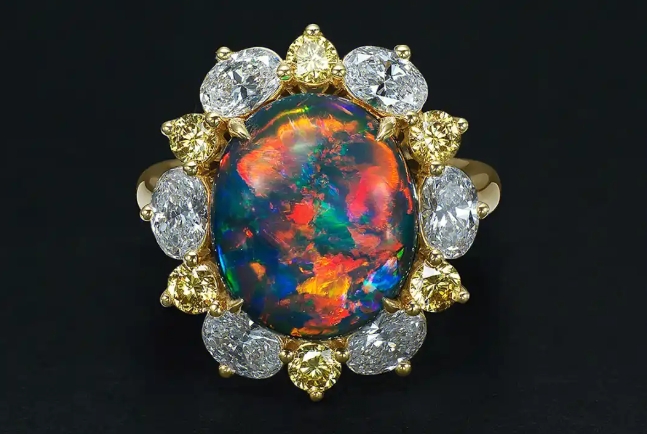
Black Opal: A Rare Gem of Depth and Color
Black opal is one of the world's most coveted and mesmerizing gemstones, known for its deep, dark body tone and vibrant play-of-color. The contrast between its dark base and vivid red, blue, green, and yellow flashes creates a stunning visual effect, often described as a "fire" within the stone. Black opals are typically transparent or semi-transparent, with their play-of-color most noticeable when viewed from different angles or under varying lighting conditions.
This rare opal is primarily sourced from Australia, specifically from the Lightning Ridge region, renowned for producing the finest black opals. Due to its scarcity, black opal is considered one of the most expensive varieties, with its value influenced by factors such as the intensity of the play-of-color, the pattern, and the quality of the stone.
Black opal is not only a symbol of natural beauty but also represents creativity and passion. It is often used in high-end jewelry, making it a timeless and luxurious choice for collectors and those seeking a unique piece. Its deep, rich colors make black opal a standout in any collection, offering unmatched beauty and elegance.
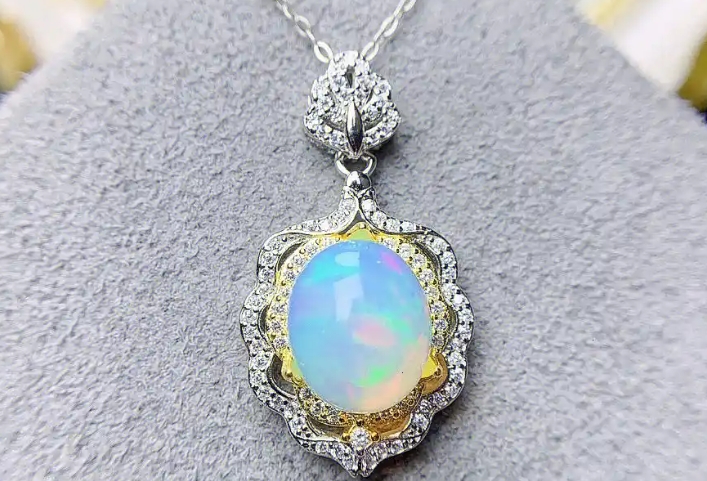
White/Light Opal: A Classic Beauty with Subtle Elegance
White opal, also known as light opal, is cherished for its soft, milky body tone and delicate play of color. Unlike black opal, which has a dark base, white opal features a light or translucent background that enhances its colorful flashes of green, blue, red, and yellow. The play of color in white opal is often more diffused, creating an elegant and ethereal effect rather than the intense contrast seen in darker opals.
Primarily sourced from Australia, particularly Coober Pedy and South Australia, white opal is more abundant than black opal, making it a more affordable yet equally captivating option. Its value depends on the brightness and vibrancy of its play-of-color, as well as the clarity and cut of the stone.
Known for its calming and soothing energy, white opal is often associated with purity, hope, and inspiration. It is a versatile gemstone, suitable for various types of jewelry, from delicate rings to elegant pendants. With its soft glow and timeless appeal, white opal is a perfect choice for those who appreciate understated beauty and classic charm.
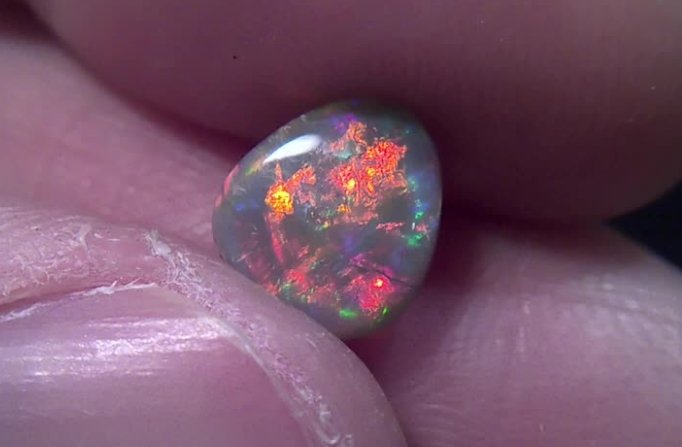
Gray/Dark Opal: A Striking Balance Between Light and Dark
Gray opal, also known as dark opal, offers a captivating blend of depth and vibrancy, sitting between black and white opals in terms of body tone. With a medium-to-dark gray base, this opal type enhances the brilliance of its play-of-color, making it more striking than white opal but not as intensely contrasted as black opal. Its flashes of red, green, blue, and yellow appear with greater depth against its subdued background, creating a mesmerizing visual effect.
Dark opals are primarily found in Australia, particularly in Lightning Ridge, Mintabie, and Ethiopia. Their value is determined by the richness of their body tone, the intensity of their play-of-color, and the uniqueness of their pattern. High-quality specimens can rival black opals in beauty while being more affordable.
Gray opal symbolizes balance, creativity, and mystery. It is an excellent choice for those who seek a gemstone with a striking yet refined appearance. Whether set in rings, pendants, or earrings, dark opal’s alluring depth and colorful fire make it a standout gemstone in any jewelry collection.
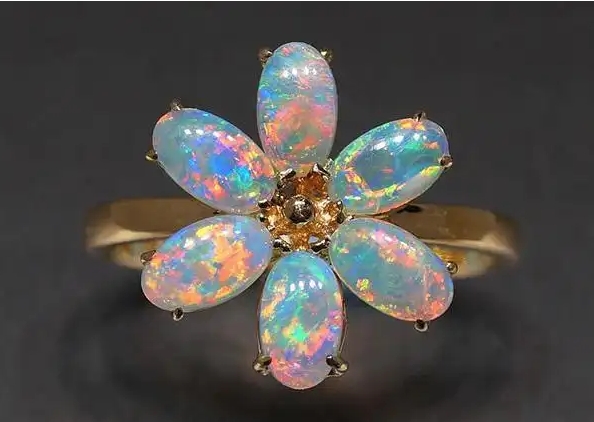
Crystal Opal: A Brilliant Display of Transparency and Fire
Crystal opal is a highly prized variety known for its transparent to semi-transparent body, which allows light to pass through and enhances its mesmerizing play of color. Unlike black or white opals, crystal opal’s clarity intensifies its vibrant red, green, blue, and yellow flashes, making its colors appear more vivid and dynamic. The best specimens exhibit a bright, multi-dimensional glow that shifts beautifully with movement and lighting.
Sourced mainly from Australia, particularly Coober Pedy and Lightning Ridge, and Ethiopia, crystal opal is valued for its transparency, brightness, and play-of-color intensity. It can appear with a clear, milky, or slightly tinted base, giving it versatility in jewelry designs.
Symbolizing clarity, creativity, and inspiration, crystal opal is a popular choice for unique and elegant jewelry. Its luminous quality makes it perfect for rings, pendants, and earrings, offering a dazzling and ethereal beauty. Whether worn in natural or faceted cuts, crystal opal remains a favorite among collectors and jewelry enthusiasts who appreciate its brilliance and depth.
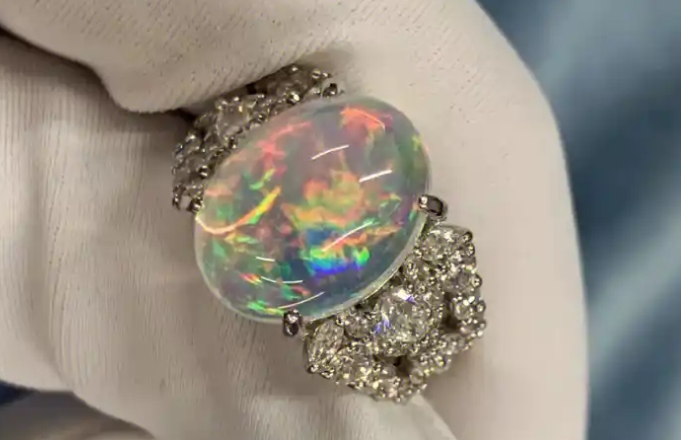
Jelly/Water Opal: A Soft, Ethereal Glow
Jelly opal, or water opal, is a unique variety characterized by its translucent to semi-transparent body with a soft, glowing appearance. Unlike opals with a distinct play of color, jelly opals often exhibit a subtle, almost ghostly shimmer, with flashes of color appearing faintly beneath the surface. Some high-quality specimens do display vibrant play of color, but in a more diffused and dreamy manner compared to crystal or black opals.
Primarily sourced from Mexico and Ethiopia, jelly opal is admired for its glassy, fluid-like texture and its ability to shift in appearance under different lighting. The color ranges from clear to milky white, with some showing hints of blue, orange, or yellow.
Jelly opal is often associated with creativity and intuition, symbolizing tranquility and emotional clarity. It is a delicate and enchanting gemstone, perfect for elegant jewelry designs such as pendants, earrings, or rings. Whether admired for its subtle glow or its occasional bursts of color, jelly opal offers a serene and mystical beauty that captivates collectors and jewelry enthusiasts alike.
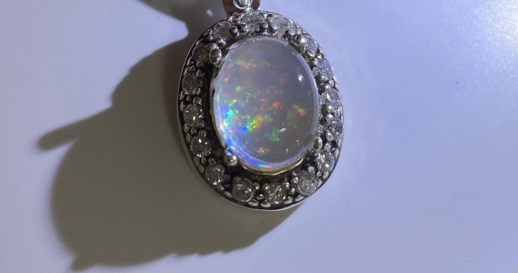
Contraluz Opal: A Gem of Hidden Fire
Contraluz opal is a fascinating variety known for its unique ability to display play-of-color when backlit. Unlike traditional opals, which reveal their brilliance under direct light, contraluz opal shows stunning flashes of color when light passes through it, creating an almost magical glowing effect. This phenomenon makes it one of the most intriguing and visually dynamic opals.
Contra luz opals, primarily sourced from Ethiopia and Mexico, typically have a transparent to semi-transparent body, allowing light to interact with their internal structure in a captivating way. Depending on the angle and intensity of the light source, their play-of-color can range from soft, pastel hues to vibrant, electric flashes.
Symbolizing enlightenment and transformation, contraluz opal is a rare and sought-after gemstone in the jewelry world. Its luminous beauty is best showcased in pendants and earrings, where natural light can enhance its remarkable optical effects. Whether admired for its delicate clarity or its hidden bursts of fire, contraluz opal is a true testament to nature’s artistry.
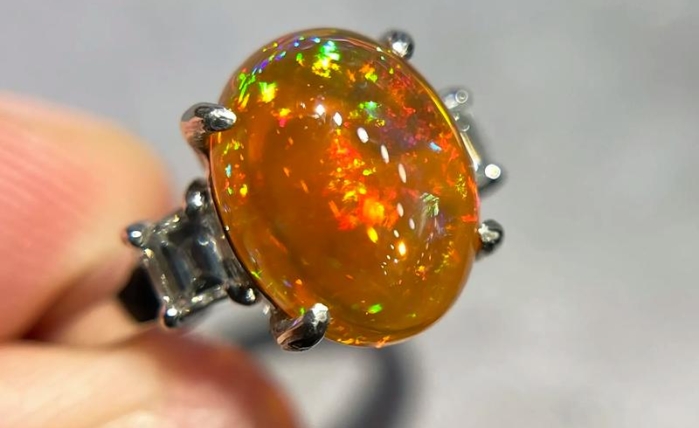
Fire Opal: A Fiery Gem of Passion and Energy
Fire opal is a striking gemstone known for its warm, fiery red, orange, and yellow hues. Unlike other opals, fire opals may or may not exhibit play-of-color. Instead, its appeal lies in its intense, translucent to transparent body color, which glows with an inner radiance reminiscent of flames. When play-of-color is present, it appears as flickering flashes within the gem, adding to its mesmerizing beauty.
Fire opal is primarily sourced from Mexico but is also found in Brazil, the United States, and Ethiopia. Mexican fire opals are the most valuable, especially those with high transparency and a deep orange or red hue. Their vibrant colors and glassy appearance make them highly desirable for jewelry.
Fire opal is a bold choice for those who love vibrant gemstones. It symbolizes passion, creativity, and confidence. It is often cut into faceted shapes or cabochons to enhance its brilliance. Whether set in rings, pendants, or earrings, fire opal’s warm glow and captivating energy make it a standout gem, perfect for those who want a touch of fiery elegance in their jewelry collection.
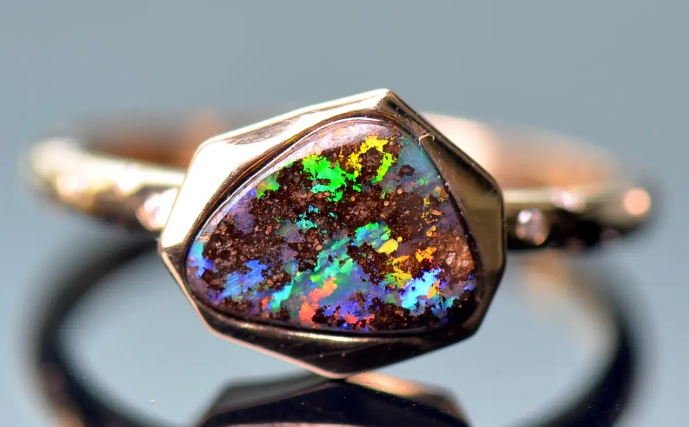
Boulder Opal: A Unique Fusion of Earth and Fire
Boulder opal is a rare and captivating variety that forms naturally within ironstone or sandstone host rock. Unlike solid opals, boulder opals retain part of their original rock matrix, which serves as a dark, dramatic backdrop to their vibrant play-of-color. This unique combination creates striking patterns, with flashes of blue, green, red, and gold contrasting beautifully against the rugged host material.
Boulder opal, primarily sourced from Queensland, Australia, is one of the most durable opal varieties due to its natural ironstone backing. It is ideal for jewelry, and its diverse range of patterns and colors ensures that no two stones are alike, adding to its uniqueness and desirability.
Symbolizing strength, creativity, and connection to nature, boulder opal is a favorite among collectors and jewelry enthusiasts. Whether polished into freeform shapes or set in bold statement pieces, this opal’s raw beauty and fiery brilliance make it a truly remarkable gemstone, blending the magic of opal with the rugged charm of the earth.
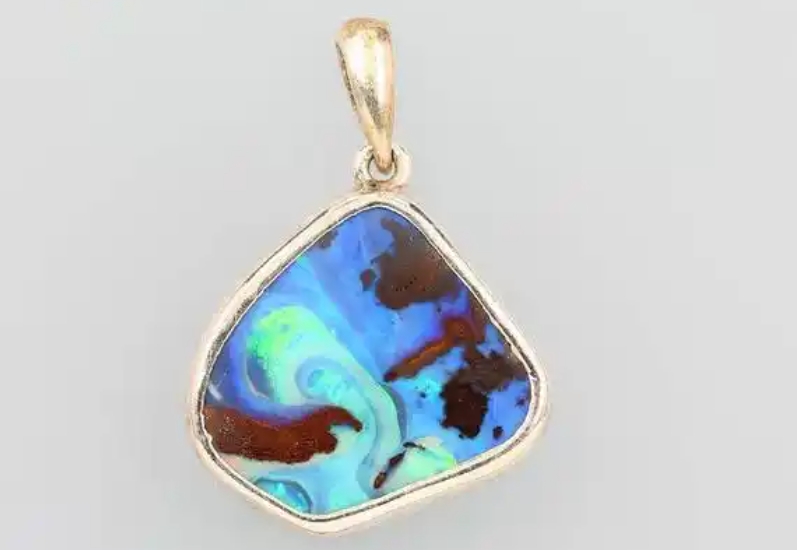
Matrix Opal: A Natural Masterpiece of Color and Texture
Matrix opal is a fascinating variety in which opal forms naturally within the pores and veins of the host rock, creating intricate patterns and a mesmerizing play-of-color. Unlike boulder opal, where opal layers sit on top of the host rock, matrix opal is interwoven with the stone, producing a unique and organic appearance. The vibrant blue, green, red, and gold flashes often appear as streaks, speckles, or intricate web-like patterns within the rock.
Matrix opal is highly prized for its natural artistry. It is primarily found in Queensland, Australia, and Honduras. The host rock, usually ironstone or sandstone, provides a durable and stable base, enhancing the gemstone’s strength and wearability in jewelry.
Symbolizing harmony between nature and brilliance, matrix opal is sought after for its one-of-a-kind aesthetics. It is often used in bold jewelry designs, where its natural patterns and vibrant play-of-color make each piece unique. Whether admired for its organic beauty or its fascinating interplay of color and texture, matrix opal remains a prized gemstone for collectors and jewelry enthusiasts.
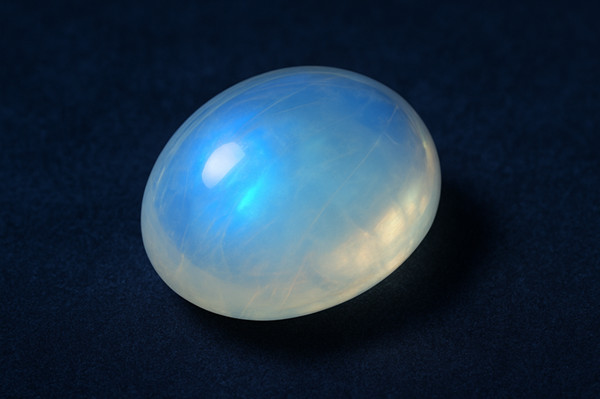
Girasol Opal: A Mystical Glow with Subtle Elegance
Girasol opal is a captivating variety known for its soft, glowing translucence rather than intense play-of-color. This opal exhibits a unique optical phenomenon where light seems to move within the stone, creating a gentle, almost ethereal glow. Some specimens may display subtle flashes of blue or golden hues, adding to their dreamy appearance.
Primarily sourced from Ethiopia and Mexico, girasol opal ranges from nearly transparent to milky white, often with a delicate bluish or golden sheen. Its name, derived from the Italian word for "sunflower," reflects its ability to catch and reflect light mesmerizingly.
Girasol opal is a favorite among those who appreciate soft, luminous gemstones. It symbolizes intuition, serenity, and emotional balance. It is often cut into cabochons or beads to highlight its glowing effect. Whether set in rings, pendants, or earrings, girasol opal’s enchanting radiance makes it a unique and elegant choice for jewelry collectors and those drawn to gemstones with a mystical allure.
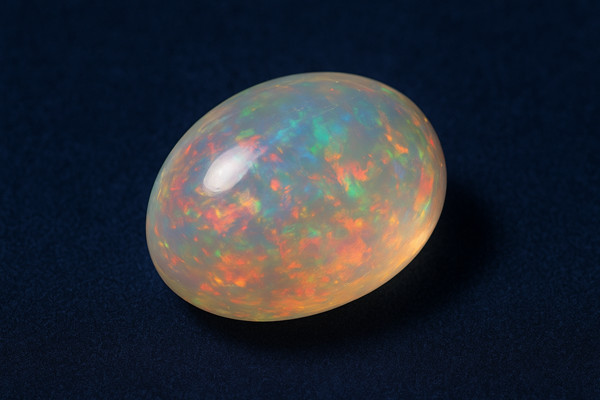
Welo Opal: Ethiopia’s Fiery Treasure
Welo opal, a highly sought-after variety from Ethiopia, is renowned for its exceptional play of color and remarkable transparency. Unlike traditional Australian opals, Welo opals often feature a honeycomb, rolling flash, or broad pattern, displaying vibrant red, green, blue, and yellow hues that shift dynamically with movement. Their high water content gives them a hydrophane property, meaning they can temporarily absorb water and become more translucent before returning to their original state once dry.
Discovered in the Wollo Province of Ethiopia in the early 2000s, Welo opals have quickly gained popularity due to their affordability compared to Australian opals while still offering incredible brilliance and diversity in patterns. Their body tone ranges from white to clear, with some exhibiting an almost neon-like intensity under the right lighting conditions.
Welo opal is a stunning choice for jewelry, symbolizing transformation, creativity, and inner fire. Whether cut into cabochons or faceted stones, its ever-changing play-of-color makes each piece one of a kind. However, due to its hydrophane nature, care should be taken to avoid prolonged water exposure. With its breathtaking beauty and luminous fire, Welo opal captivates gem lovers worldwide.
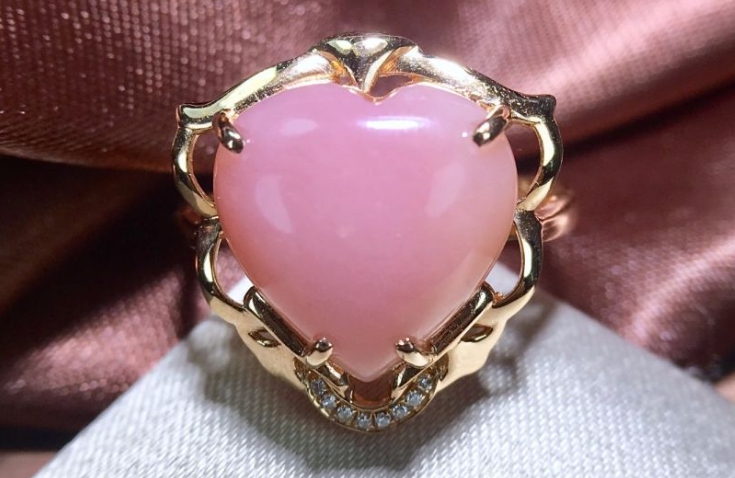
Pink Opal: A Gentle and Soothing Gemstone
Pink opal is a delicate and calming variety known for its soft, pastel hues ranging from pale blush to deeper rose tones. Unlike many other opals, pink opal typically lacks a strong play-of-color, offering a smooth, uniform appearance with a serene glow instead. Its subtle beauty and gentle appearance make it a favorite for those who appreciate understated elegance.
Primarily sourced from Peru, Australia, and the United States, pink opal is often found in translucent to opaque forms. Its opaque variety is particularly valued for its even color distribution and smooth texture, which makes it an ideal gemstone for crafting beautiful jewelry pieces.
Symbolizing emotional healing, love, and peace, pink opal is often associated with calming and soothing energy. It is believed to help relieve stress and promote emotional balance. Pink opal is commonly used in jewelry, necklaces, and earrings, offering soft elegance. Whether set in silver or gold, pink opal’s subtle beauty makes it a cherished gemstone for those seeking tranquility and gentle charm.
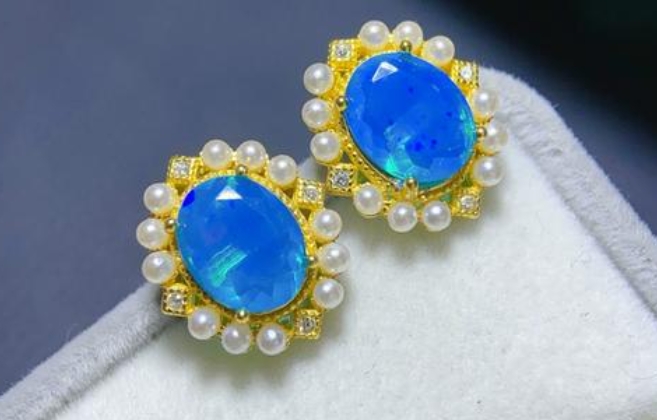
Blue Opal: A Tranquil Gem with Oceanic Beauty
Blue opal is a serene and captivating variety that showcases a range of soft to vibrant blue hues, often with a subtle play of color. Its gentle appearance, with flashes of light blue or turquoise, evokes the tranquility and depth of the ocean. Unlike other opals, blue opal typically exhibits a more subdued color play, offering a calm and ethereal glow that adds to its allure.
Blue opals are primarily sourced from Peru, Australia, and the United States and can be found in both opaque and translucent forms. The most prized blue opals have a clear, bright blue body tone and a hint of iridescence. Some specimens display a milky or pearly finish, which enhances the gem's soft, peaceful qualities.
Symbolizing communication, intuition, and inner peace, blue opal is often believed to promote emotional healing and clarity. It is a popular choice for jewelry, usually set in rings, necklaces, and earrings to create pieces that reflect calm and elegance. With its soothing appearance and understated beauty, blue opal is perfect for those seeking a gemstone that embodies tranquility and a connection to the peaceful depths of the natural world.
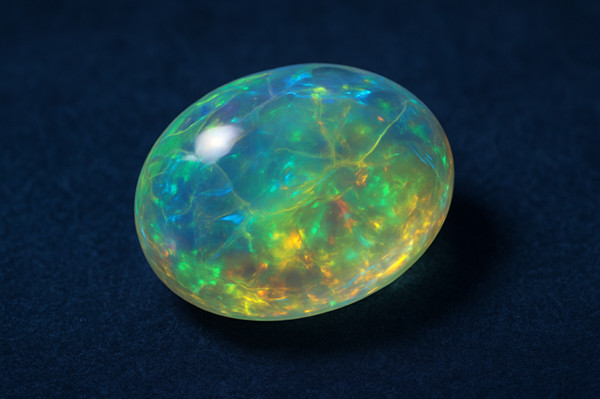
Hyalite Opal: The Transparent Beauty with Inner Glow
Hyalite opal is a unique and captivating variety known for its clear, transparent body and exceptional clarity. Often referred to as "water opal" or "glass opal," it lacks the vivid play-of-color typically associated with opals but shines with an inner glow. When exposed to light, hyalite opal can exhibit a soft, ethereal fluorescence, giving it a luminous, almost magical appearance. Some specimens may show subtle flashes of color or opalescence, but its most defining characteristic is its transparency and light-catching qualities.
Hyalite opal is primarily found in regions such as the Czech Republic, Mexico, and the United States. Its transparency and subtle fluorescence make it a beautiful choice for those who appreciate understated elegance. It is often used in jewelry, particularly in pieces where light can interact with the stone, creating an enchanting glow.
Symbolizing clarity, purification, and spiritual awakening, hyalite opal is believed to help clear blockages and promote mental and emotional healing. Its simplicity and soft beauty make it popular for delicate jewelry designs, offering a calming and luminous effect. Whether set in rings, necklaces, or earrings, hyalite opal provides a timeless, radiant charm that captivates with its quiet brilliance.
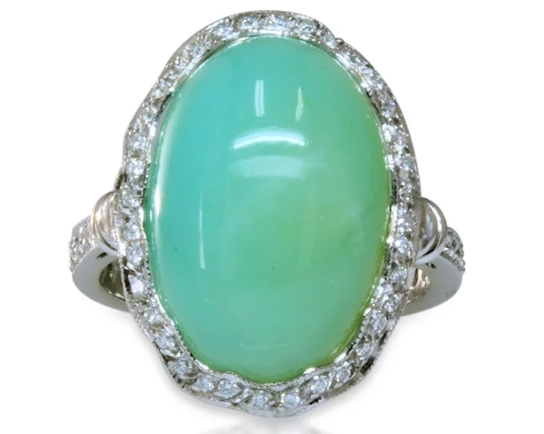
Prase Opal: A Unique Gemstone with Subtle Green Hues
Prase opal is a rare and distinctive variety known for its unique green coloration. From pale, translucent greens to deeper olive tones, prase opal often lacks the intense play-of-color that characterizes other opals, yet it still exhibits a captivating glow. Its body tone can be solid or slightly translucent, with occasional flashes of lighter or darker green hues that add to its charm.
Primarily found in regions like the Czech Republic, Russia, and Ethiopia, prase opal is prized for its earthy, organic appearance. Its color variations are often reminiscent of nature, making it an excellent choice for those seeking a gemstone that connects them with the earth.
Prase opal symbolizes growth, renewal, and healing. It is believed to promote physical and emotional well-being and help with self-discovery and inner peace. Prase opal is often used in jewelry like rings, pendants, and earrings, adding a subtle, natural beauty to any piece. Whether set in silver or gold, its soft green tones and gentle glow make it a cherished gemstone for those who appreciate a connection to the natural world.
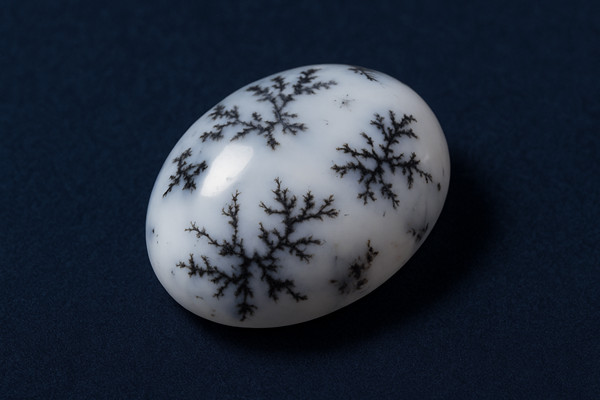
Dendritic Opal: A Gemstone of Nature’s Artistic Patterns
Dendritic opal is a unique variety of opal known for its striking appearance. It features tree-like or fern-like inclusions that resemble natural, organic patterns. These inclusions, known as "dendrites," are often dark and contrast against the opal’s light or translucent body, creating beautiful, intricate designs within the stone. Unlike many other opals, dendritic opal's beauty lies in these natural patterns rather than a vibrant play of color.
Found in regions such as the United States, Australia, and Mexico, dendritic opal is often translucent to opaque with shades of white, gray, and cream. At the same time, the dendrites themselves can appear in various colors like black, brown, or dark green. The unique, fern-like patterns give each stone a one-of-a-kind appearance, making it especially desirable for collectors and those seeking genuinely unique gemstones.
Symbolizing growth, strength, and balance, dendritic opal is believed to connect its wearer with nature and promote grounding and stability. It is commonly used in jewelry designs like rings, pendants, and cabochon earrings, where its intricate patterns can be beautifully displayed. Whether admired for its natural artistry or its serene elegance, dendritic opal remains a gemstone that captures the essence of nature’s beauty.
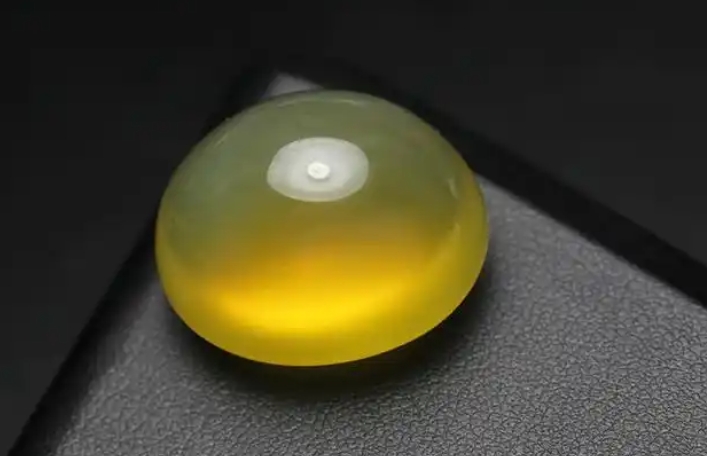
Honey Opal: A Warm and Inviting Gemstone
Honey opal is a stunning variety known for its warm, golden-yellow to amber hues, reminiscent of honey. This opal type typically lacks the intense play-of-color found in other opals but is valued for its rich, translucent appearance and soft, glowing shine. The color can range from light, pale yellows to deeper, more intense amber tones, which create a soothing and inviting effect.
Honey opal is primarily sourced from Mexico and the United States. It is often found in translucent to opaque forms, and its warm color makes it a popular choice for jewelry. The stone's smooth, honey-like tones add a touch of elegance and warmth to any design, making it ideal for pendants, rings, and earrings.
Symbolizing warmth, prosperity, and vitality, honey opal is believed to bring positive energy and attract abundance. Its gentle glow and earthy charm make it a perfect gemstone for those seeking a piece that radiates warmth and serenity. Whether set in gold or silver, honey opal's inviting beauty makes it a beloved choice for those who appreciate this unique opal variety's natural, calming essence.
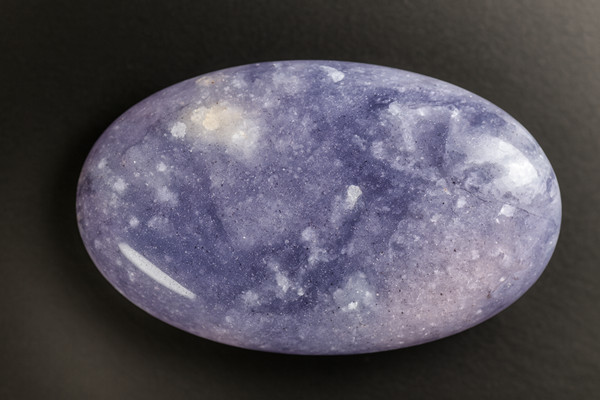
Morado Opal: A Rare and Mesmerizing Gemstone
Morado opal is a unique and rare variety of opal prized for its rich, deep purple to lavender hues. Its stunning color can range from a soft lilac to a more intense violet; in some cases, it displays a beautiful mix of purple and blue tones. Morado opal often exhibits a subtle play of color, with flashes of red, blue, or green adding to its mesmerizing appearance, making it a truly captivating gemstone.
Primarily found in Mexico, Morado opal is relatively rare compared to other opals, which adds to its desirability. Its smooth texture and vibrant colors make it an excellent choice for high-quality jewelry, and it is often cut into cabochons or polished to highlight its natural beauty.
Symbolizing creativity, passion, and transformation, Morado opal is believed to enhance emotional and spiritual growth. It is thought to help with inner peace and to support creative expression. Whether set in rings, necklaces, or earrings, Morado opal offers a distinctive and luxurious look, making it an exceptional choice for anyone seeking a gemstone that blends rare beauty with powerful energy.
Peruvian Opal: A Tranquil and Unique Gemstone
Peruvian opal is a stunning variety known for its soft, pastel blue, green, and turquoise hues. Unlike many other opals, it is often found in an opaque or semi-translucent form, creating a serene, calming appearance. Its colors can range from light blue to mint green and sometimes even show delicate hints of pink, giving it an ethereal and peaceful quality. While it may not display the traditional play-of-color seen in other opals, its vibrant and consistent color makes it highly valued for collectors and jewelry makers.
Peruvian opal, primarily sourced from the Andes mountains in Peru, is considered one of the most beautiful and sought-after opals. It has a smooth, polished finish and is often used in cabochon cuts, beads, and pendants.
Symbolizing tranquility, healing, and emotional balance, Peruvian opal is believed to have soothing properties, helping to relieve stress and promote inner peace. It is a popular choice for jewelry, particularly in pieces meant to evoke calmness and clarity. Whether set in rings, necklaces, or earrings, Peruvian opal's gentle beauty and calming energy make it a perfect addition to any collection or jewelry design.
Hydrophane Opal: A Fascinating Gem with Water-Absorbing Properties
Hydrophane opal is a unique and intriguing variety known for its ability to absorb water. This opal’s most distinctive characteristic is its hydrophane nature, meaning that it can temporarily change in appearance when it comes into contact with water. It may become more translucent, enhancing its play-of-color or revealing more profound, more vibrant hues before returning to its original state once it dries. This dynamic transformation makes hydrophane opal a gemstone that constantly evolves, offering a captivating experience for collectors and jewelry enthusiasts alike.
Sourced primarily from Ethiopia, hydrophane opal is known for its wide range of colors, from milky whites to vibrant oranges, yellows, and reds. Some specimens may display flashes of blue, green, or red, depending on the angle and exposure to light, which adds to their allure.
Symbolizing fluidity, adaptability, and emotional healing, hydrophane opal is believed to help release old patterns and emotions, allowing for personal growth and transformation. Its intriguing ability to change in the presence of water makes it a perfect choice for jewelry that highlights its natural beauty and unique properties. Whether set in rings, necklaces, or earrings, hydrophane opal is a gemstone that continues to fascinate with its fluid charm.
How Opals Are Formed in Nature: A Stunning Geological Process
Opals are formed through a fascinating natural process that takes millions of years. Unlike most gemstones, opals do not crystallize. Instead, they are created when silica-rich water seeps into rocks' cracks and cavities, often in volcanic areas. As the water evaporates, it leaves a gel-like substance that eventually hardens into opal. Here’s a more detailed look at the process:
Silica-Rich Water: The formation of opals begins with silica-rich water, often originating from volcanic rocks or sedimentary layers. This water contains dissolved silica in the form of silicon dioxide, which is essential for opal formation.
Deposition and Evaporation: Over time, this silica-rich water fills cracks, cavities, or voids within rocks, often mixing with clay and other minerals. As the water slowly evaporates, the silica hardens into a gel-like substance.
Gel to Solid Opal: The silica gel gradually solidifies into opal with time. In some cases, opal forms in layers, and water in these layers can cause the opal to show various colors and patterns, including the iridescent play-of-color that opals are famous for.
Play-of-Color Formation: The play-of-color in opals is caused by the diffraction of light through microscopic silica spheres that are packed in a regular pattern within the opal. The size and arrangement of these spheres determine the opal’s color, with larger spheres typically producing reds and oranges and smaller spheres producing blues and greens.
Opal formation takes place in environments with specific conditions, such as dry, arid climates. Regions with volcanic activity, such as Australia, Mexico, and Ethiopia, are prime locations for high-quality opal deposits. The natural beauty of opals results from this slow, intricate process, which yields one of the most unique gemstones in the world.
The Significance of Opals in Different Cultures: A Gemstone of Mystery and Beauty
Opals have captivated human imagination for centuries, and they are admired not only for their stunning visual beauty but also for their deep cultural significance. Across various cultures, opals have been regarded as powerful and mystical stones, symbolizing a range of meanings from hope to protection. Here’s a look at the significance of opals in different cultures:
1. Ancient Romans
The Romans were among the first to celebrate the beauty and power of opals. They believed opals symbolized hope, purity, and good luck. The Romans also admired opals for their brilliant array of colors, associating them with the play-of-color seen in the rainbow. Opals were used in jewelry and even as amulets, believed to bring fortune and ward off evil.
2. Middle Ages (Europe)
During the Middle Ages, opals were thought to possess magical properties, often associated with invisibility and protection. Some believed that opals could make the wearer invisible, while others thought they could cure diseases or enhance the wearer’s strength. The opal’s color-changing nature led to the belief that it could represent both life and death, making it a complex and mysterious stone in European folklore.
3. Aboriginal Australians
Opal holds immense cultural importance for Indigenous Australian communities. In Aboriginal mythology, opals are seen as a divine gift from the creator. One popular legend speaks of the Rainbow Serpent, which is said to have created the opals when it descended to Earth, leaving behind the colorful stones as a symbol of life, connection, and beauty. The stone is revered in Aboriginal art and culture, representing the land’s spiritual connection and heritage.
4. Indian Culture
In Indian culture, opals symbolize beauty, good fortune, and love. The stone is associated with the planet Venus, which governs love, harmony, and relationships in astrology. Opals bring peace and tranquility, enhancing emotional stability and creativity. Some even associate opals with the goddess Lakshmi, representing wealth and prosperity.
5. Ancient Greeks
The ancient Greeks regarded opals as the symbol of foresight and prophecy. The stone was linked to the goddess of prophecy, and it was believed that opals could give their wearer the ability to foresee the future and offer protection against harm. Opals were also believed to bring joy and happiness to those who possessed them.
6. Victorian Era
During the Victorian era, opals experienced a surge in popularity, particularly in England. The stone’s dazzling array of colors and mysterious beauty enchanted the Victorians. At the time, opals were believed to bring good and bad luck, with some superstitions associating them with the spirit world. It was thought that opals could enhance the wearer’s intuition and protect them from evil.
7. Modern Spirituality
In contemporary spiritual practices, opals are often seen as stones of transformation and healing. They are believed to have the power to amplify emotions, providing clarity in emotional situations and bringing a sense of peace and tranquility to the wearer. Opals are also considered powerful tools for personal growth, creativity, and enhancing one’s spiritual connection.
From the ancient Romans to modern spiritualists, opals have been admired and revered across cultures for their mystical qualities, unique beauty, and symbolic significance. Whether seen as a symbol of hope, good fortune, or transformation, opals continue to be cherished for their vibrant colors and powerful energy. They represent a timeless connection between the earth and the spiritual world, making them a treasured gemstone in many cultures around the globe.
Caring for Opal Jewelry
Opals are undeniably beautiful but also require care and attention to maintain their brilliance. Unlike other gemstones, opals are relatively soft, ranking between 5.5 and 6.5 on the Mohs hardness scale. This means they can be prone to scratching and damage if improperly handled. When caring for opal jewelry, it is essential to avoid exposing the stones to harsh chemicals or extreme temperatures, as these can cause the gem to crack or lose its luster.
To clean opal jewelry, it is recommended to use a soft, damp cloth to gently wipe away any dirt or oils that may accumulate over time. A mild soap solution can be used for a deeper clean, ensuring the opal is thoroughly rinsed and dried carefully. Avoid using ultrasonic cleaners or steam-cleaning methods, as these can jeopardize the integrity of the gemstone. Instead, opt for gentle cleaning techniques that preserve the opal’s unique characteristics.
Properly storing opal jewelry is equally important. Keep opals in a soft pouch or a jewelry box lined with fabric to protect them from scratches and abrasions. Keeping opals separate from other jewelry pieces can help avoid unnecessary damage. Additionally, consider placing a small piece of cloth or a cotton ball in the storage space to absorb moisture, as opals can be sensitive to changes in humidity. Taking these precautions ensures that your opal jewelry remains as stunning as the day you acquired it.
Opal vs. Other Gemstones: Comparison and Investment Potential
When considering gemstone jewelry, opals offer a unique alternative to traditional choices like diamonds, rubies, and sapphires. Understanding the differences between opals and other gemstones is essential for making an informed decision about your purchase and assessing their potential as an investment.
Appearance: The most apparent difference between opals and other gemstones is their appearance. Opals are known for their play of color, a phenomenon caused by the diffraction of light within the stone. Diamonds, on the other hand, are prized for their brilliance and sparkle. Rubies and sapphires are known for their rich, vibrant colors.
Durability: In terms of durability, diamonds are the hardest gemstone, with a Mohs hardness of 10. Sapphires and rubies are also relatively hard, with a Mohs hardness of 9. Opals are softer, with a Mohs hardness of 5.5 to 6.5, making them more susceptible to scratches and damage. Consider looking into "moissanite" an alternative gemstone for the same durability.
Rarity: A gemstone's rarity can significantly impact its value and investment potential. Diamonds, while not necessarily rare, are often marketed as such due to the diamond industry's control. High-quality opals, particularly black ones with strong color play, can be rare and valuable. Rubies and sapphires are also rare, especially in large sizes and vivid colors.
Price: The price of a gemstone is determined by various factors, including its size, quality, rarity, and demand. Diamonds are typically the most expensive gemstones, followed by rubies and sapphires. Opals, notably smaller or less rare varieties, can be more affordable than these other gemstones.
Investment Potential: While all gemstones can potentially be an investment, some are more likely to appreciate than others. High-quality diamonds, rubies, sapphires, and black opals are often considered suitable investments, as their value tends to hold or increase over time. However, it's important to note that gemstone investments can be subject to market fluctuations and are not guaranteed to be profitable.
At Wuzhou Tianyu Gems Co., Ltd, we offer a diverse selection of gemstones, including opals, diamonds, rubies, and sapphires. Our expert team can help you compare the different gemstones and make an informed decision based on your preferences, budget, and investment goals.
