



Materials & Craftsmanship Unveiled: The Core Elements of High-End Watch Jewelry
The allure of luxury watches extends far beyond their movements—it lies in the exquisite craftsmanship and premium materials that transform timepieces into wearable art. In an era where mechanical precision is increasingly commoditized, it is the alchemy of rare metals, meticulously set gems, and generations-honed artisanal techniques that elevate a watch from functional object to heirloom jewelry. This convergence—often termed haute horlogerie joaillerie—represents the pinnacle of wearable luxury, where every surface, edge, and reflection is engineered to evoke emotion, status, and timeless value.
From the molten pour of 18K gold to the final breath of a master polisher’s cloth, every step in a high-end watch’s creation is a testament to human ingenuity. This article delves deep into the materials and processes that define watch jewelry, exploring how precious alloys, colored gemstones, and micro-engineering converge to create time-transcending objects. Whether you’re a collector, investor, or simply an admirer of fine craftsmanship, understanding these elements will forever change how you perceive the watch on your wrist.
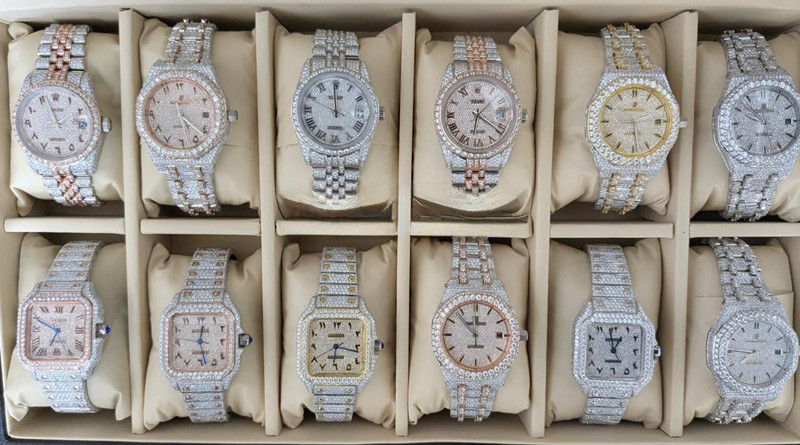
The Role of Jewelry-Grade Materials in Luxury Watches
At the heart of every jewelry watch lies a deliberate selection of materials that serve both aesthetic and structural purposes. Unlike standard timepieces, where stainless steel and sapphire dominate for durability and cost-efficiency, joaillerie watches employ materials traditionally reserved for fine jewelry—precious metals, rare gemstones, and exotic composites that demand specialized expertise.
Precious Metal Cases: Gold, Platinum, and Rose Gold
The choice of case material is the first and most visible declaration of luxury. While stainless steel remains the workhorse of sport watches, precious metals transform a timepiece into a statement of wealth and refinement.
18K Gold (Yellow, White, and Red Variants): Comprising 75% pure gold alloyed with copper, silver, or palladium, 18K gold strikes the optimal balance between richness and durability. Yellow gold evokes classic opulence, white gold offers a contemporary platinum-like sheen (often rhodium-plated), and red gold—popularized by Audemars Piguet—delivers warm, vintage-inspired tones. The alloying process is critical: too much copper makes the metal brittle; too little compromises color saturation.
Platinum (950/1000): The rarest and most challenging metal in watchmaking, platinum is 30 times scarcer than gold and twice as dense. Its cool, silvery luster resists tarnishing and develops a unique patina over decades. Patek Philippe and Rolex reserve platinum for their most exclusive models (e.g., the Daytona 116506), where its weight—noticeable yet comfortable—signals understated rarity. Machining platinum requires diamond-tipped tools and specialized furnaces, contributing to its $50,000+ premium over steel counterparts.
Rose Gold (5N and Beyond): A modern favorite, rose gold’s copper content (typically 20–25%) creates a spectrum from soft pink to deep salmon. Brands like Hublot and Richard Mille push boundaries with proprietary alloys like Magic Gold—an 18K gold-ceramic composite that is scratch-resistant to 1000 Vickers, nearly matching sapphire.
The cost of these materials is only part of the story. Precious metal cases require cold forging rather than stamping, a process that compresses the metal grain for superior strength and luster. The result? A case that reflects light with a depth and warmth unattainable in steel.
Colored Gemstone Inlays and Cutting Techniques
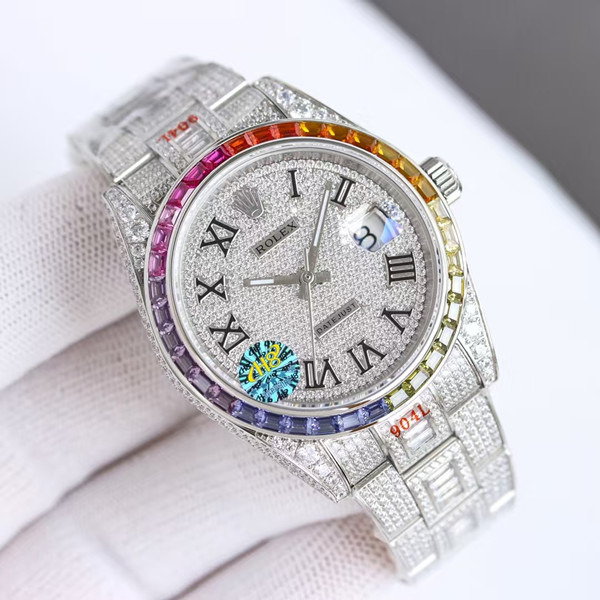
Beyond metals, colored gemstones introduce chromatic drama and technical complexity. While diamonds dominate bezel settings, sapphires, rubies, and emeralds appear in dials, bezels, and even movement bridges.
Sapphire Variations: Beyond transparent casebacks, colored sapphires (blue, orange, yellow) are cut into baguettes or trapezoids for rainbow bezels—a trend pioneered by Hublot’s Big Bang Unico Sapphire Rainbow. Each stone is lab-verified for color consistency, with natural inclusions minimized through heat treatment.
Ruby and Emerald Accents: Used sparingly due to cost and fragility, these gems often appear as hour markers or cabochons on winding crowns. Cartier’s use of cabochon sapphires on Panthère models is iconic—each stone hand-polished to a perfect dome.
Cutting Precision: Gem setting in watches demands tolerances of 0.01mm. Invisible setting—where stones are grooved and slid into rails without visible prongs—is a hallmark of Van Cleef & Arpels’ high-jewelry watches. The technique, requiring 300+ hours per dial, creates a seamless carpet of light.
For collectors seeking personalization, Tianyu Gems offers lab-grown colored diamonds and sapphires with identical optical properties to natural stones—certified by IGI and available in custom cuts for bezel upgrades.
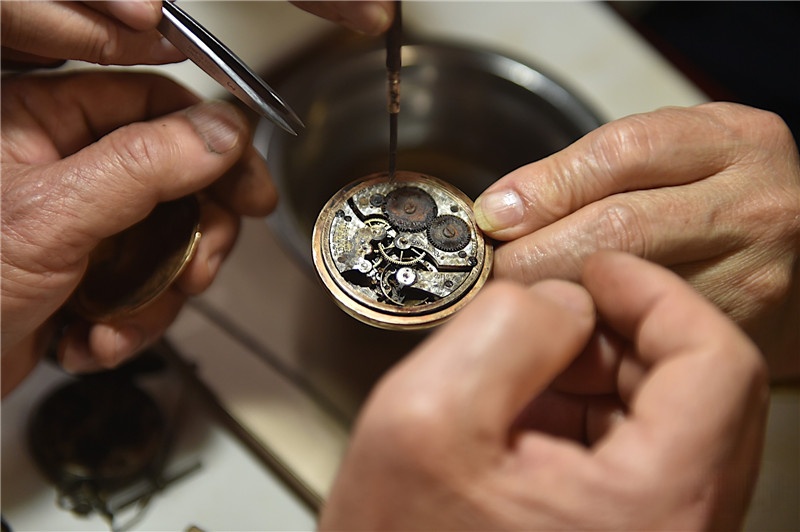
Craftsmanship Details That Define Opulence
Materials provide the canvas; craftsmanship paints the masterpiece. In high-jewelry watchmaking, every surface is finished to a level of perfection that rivals museum-grade objets d’art.
Hand-Set Gemstones and Polishing Mastery
The art of gem setting is where watchmaking meets joaillerie. Two techniques dominate:
• Claw/Prong Setting: Traditional and secure, used for larger center stones. Each prong is hand-shaped, filed, and polished to minimize metal visibility. Piaget’s Possession watches feature prongs so fine they appear to float the diamond.
• Pavé Setting: Hundreds of tiny diamonds (0.5–1.5mm) are set in a honeycomb pattern. The setter drills micro-holes, inserts stones, and raises grains of surrounding metal to secure them. A single Altiplano pavé dial may require 1,200 stones and 40 hours of work. The final step—bombé polishing—curves the surface for ergonomic comfort and light play.
Polishing follows setting. Master polishers use progressively finer grits (down to 0.25-micron diamond paste) to achieve mirror finishes on angled surfaces. Black polishing (polissage noir), a technique reserved for movement components, creates a glass-like reflection that distorts surroundings like a dark mirror.
Intricate Engravings and Textured Finishes
Surface treatments add narrative and texture:
• Hand Engraving: Using a burin (a sharpened steel tool), engravers carve floral motifs, family crests, or mythological scenes into casebacks and movement plates. Vacheron Constantin’s Les Cabinotiers pieces feature engravings so fine they require 10x magnification.
• Guilloché: A rose engine lathe cuts geometric patterns (sunburst, basketweave, clous de Paris) into dials. Breguet’s Classique collection showcases guilloché main—hand-guided patterns that dance with light. Each dial takes 8–12 hours.
• Grand Feu Enamel: Vitreous enamel is layered, fired at 800°C, and polished to a glass-like finish. Colors are achieved with metal oxides—cobalt for blue, chromium for green. Patek Philippe’s Rare Handcrafts dials may endure 20+ firings, with failure rates over 50%.
These techniques are not merely decorative; they require decades of apprenticeship and are increasingly rare. As Jaeger-LeCoultre’s CEO notes, “We lose one master engraver every year, and train none to replace them.”
How Materials Shape Style and Investment Value
Material choice is the silent auctioneer of perceived value. A steel sports watch may retail for $8,000; the same model in platinum exceeds $80,000—not due to function, but signaling.
Precious Metals vs Stainless Steel: Visual and Tactile Differences
• Visual Impact: Platinum’s cool luster ages to a soft gray patina; gold warms with skin contact. Steel, while durable, reflects light flatly. Side-by-side, a platinum Daytona appears denser, its brushed surfaces deeper.
• Tactile Experience: Platinum’s 60% greater density creates a substantial “heft” that steel cannot replicate. Gold’s thermal conductivity makes it feel warmer on the wrist.
• Market Perception: Auction data from Phillips shows platinum references command 40–60% premiums over steel equivalents. A Patek 5711/1A (steel) sells for $120,000; the 5711/1P (platinum) fetches $300,000+.
Craftsmanship’s Direct Impact on Resale and Longevity
Craftsmanship is the multiplier of material value:
• Condition Sensitivity: Hand-engraved casebacks and guilloché dials are irreparable if damaged. A scratched pavé dial may reduce value by 50%.
• Provenance Premium: Watches with documented service history from brands like Rolex or Patek retain 90%+ of value. Third-party over-polishing can destroy collector appeal.
• Rarity Multiplier: Limited editions with unique craftsmanship (e.g., Chopard’s animal-motif engravings) appreciate 15–20% annually, per Knight Frank Luxury Index.
Investors take note: A gem-set watch with original box, papers, and service records is a tangible asset with inflation-beating returns.
Gemstone Integration in Haute Horlogerie
Gem setting in watches is not mere decoration—it is structural engineering. Stones must withstand 3–5G forces from automatic rotors and thermal expansion without loosening.
Diamond Pavé Dials and Bezel Settings
• Dial Pavé: Stones are set in descending size toward the center, creating a gradient effect. Graff’s MasterGraff Tourbillon uses 307 diamonds (32 carats) across dial and case, each calibrated for color (D–F) and clarity (VVS1+).
• Bezel Innovations: The snow setting—random-sized diamonds creating a frost-like effect—requires 3D CAD modeling to ensure fit. Bulgari’s Serpenti Misteriosi uses this for flexible bracelet-watches.
Rare Gem Sourcing and Ethical Certification
Natural gemstones come with provenance challenges. Leading maisons now mandate:
• Kimberley Process Certification for conflict-free diamonds
• RJ C Responsible Jewellery Council audits for supply chain ethics
• GIA/IGI Grading for lab-grown alternatives
Lab-grown diamonds—chemically identical to natural stones—are gaining traction. Tianyu Gems produces IGI-certified lab diamonds in fancy colors (pink, blue, yellow) at 30–40% of natural prices, enabling bespoke rainbow bezels without ethical compromise.
Advanced Surface Treatments and Finishing
The devil is in the details—and in watchmaking, those details are measured in microns.
Guilloché Patterns and Grand Feu Enamel
• Guilloché Variations: Flame, wave, and honeycomb patterns are cut at angles to catch light differently from every viewpoint. A. Lange & Söhne’s Lange 1 uses tremblage—a stippled texture—for frosted effects.
• Enamel Challenges: Grand feu requires multiple firings; each risks cracking. Jaquet Droz’s Petite Heure Minute uses paillonné enamel—gold foil beneath translucent layers—for luminous depth.
Micro-Engineering: Skeletonization and Openworking
Skeleton watches remove excess metal to reveal the movement, then decorate exposed surfaces:
• Hand-Chamfering: Edges are beveled at 45° and polished to a mirror finish. Richard Mille’s RM 052 Tourbillon Skull features titanium bridges with black PVD and hand-engraved skulls.
• Gem-Set Movements: Piaget’s 1200S movement is the thinnest skeletonized automatic (2.4mm), with 200+ diamonds set into bridges—a feat requiring 0.05mm precision.
Future-Proof Materials and Innovations
The future of watch jewelry lies in sustainability, durability, and personalization.
Lab-Grown Gems and Sustainable Alloys
• CVD Diamonds: Chemical vapor deposition creates diamonds with fewer inclusions than natural stones. De Beers’ Lightbox and Swarovski now supply watch-grade stones.
• Recycled Precious Metals: Rolex uses 100% recycled gold; Chopard aims for 100% ethical gold by 2025.
Customization Potential with Bespoke Jewelry Partners
Brands increasingly collaborate with jewelers for one-of-one pieces. Tianyu Gems offers:
• Custom CAD Design: 3D-model gem layouts for existing watches
• Lab-Grown Rainbow Sets: 40+ colored stones for bezel upgrades
• Lifetime Warranty: Covers stone loss and metal fatigue
A steel Daytona transformed with a custom rainbow bezel can increase in value by 50–100%, blending investment with individuality.
Conclusion: Masterful craftsmanship elevates a watch from mere timekeeper to a timeless masterpiece of wearable art. In the dance between precious materials and human skill, every reflection, every texture, every meticulously set stone tells a story—of heritage, innovation, and the relentless pursuit of beauty. As technology advances and sustainability reshapes luxury, one truth remains: the finest watches are not just worn—they are cherished, passed down, and forever admired. The next time you glance at your wrist, remember: you’re not just telling time. You’re wearing history.
