



Heating, Irradiation, Dyeing: Enhancing Gemstone Color
Color is the soul of a gemstone. Whether it is the fiery red of a ruby, the deep blue of a sapphire, or the ocean-like green of an emerald, color is often the first quality that captures our attention. In fact, gemologists agree that color accounts for the majority of a gemstone’s value, even more than clarity or cut. Yet not every stone comes out of the earth with the ideal hue. For centuries, jewelers and gem cutters have used treatments to enhance or stabilize gemstone colors, making them more desirable for the jewelry market.
These treatments—ranging from simple heating to high-tech irradiation—are not necessarily deceptive. Many are widely accepted in the industry, provided they are disclosed to buyers. Without them, some gemstones would appear dull, uneven, or less vibrant than what consumers expect. At the same time, treated stones raise important questions about authenticity, value, and ethics. Should a treated sapphire command the same price as a natural one with no human intervention? How can buyers be sure they know what they are purchasing?
This article explores three of the most common methods used to enhance gemstone colors: heating, irradiation, and dyeing. We will also touch on other practices like bleaching, oiling, and surface coating. By understanding how these treatments work, buyers and collectors can make informed choices, ensuring they purchase gems that match both their aesthetic desires and their investment goals.
Overview of Gemstone Color Treatments
In gemology, the term treatment refers to any process that alters the appearance of a gemstone after it has been mined. Treatments may improve color, clarity, or durability, and they can dramatically affect a stone’s visual appeal. For consumers, it is crucial to know whether a gemstone has been treated, since this influences both its value and care requirements.
Historically, treatments are not new. Ancient civilizations already used heating to intensify the red of rubies or the blue of sapphires. With modern science, the methods have expanded, and today laboratories employ advanced techniques such as irradiation, diffusion, and filling. Some treatments are permanent, meaning the enhanced color will remain stable for the gem’s lifetime. Others, such as dyeing or coating, may fade over time with exposure to sunlight, chemicals, or daily wear.
Treatments are also categorized by how they affect market value. Heating, for example, is broadly accepted in sapphires and rubies and does not significantly reduce their price when disclosed. On the other hand, dyed stones or those with surface coatings are often considered lower-value because the enhancement is less durable.
Ultimately, color treatments allow a larger portion of mined gemstones to reach the market in an attractive form, benefiting both sellers and buyers. Still, transparency is essential. Leading jewelers and gemstone suppliers always disclose the type of treatment a gem has undergone, enabling customers to balance beauty, durability, and value when making a purchase.
Heating Treatment
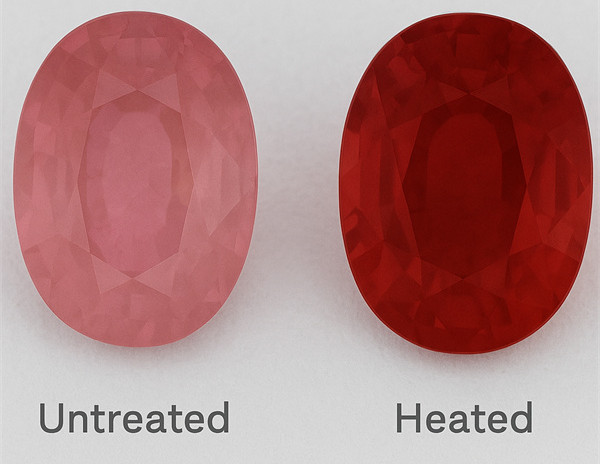
Heating is the oldest and most widely used method of gemstone enhancement. By exposing stones to high temperatures—often between 500°C and 1800°C—gemologists can dramatically improve a gem’s appearance. The process alters the internal structure of minerals, dissolves unwanted inclusions, and changes how light interacts with the stone. The result is a clearer, brighter, and more desirable color.
This treatment is especially common in sapphires and rubies. Many sapphires mined from Sri Lanka or Madagascar, for example, may initially look pale or cloudy. Through controlled heating, their blue deepens into the vivid shades that consumers associate with premium quality. Similarly, rubies that appear purplish or overly dark can be transformed into fiery reds, greatly increasing their market value. Beyond the corundum family, heating is also applied to aquamarine, which naturally tends toward a greenish hue. Heating removes the green tones, leaving behind the pure, sky-blue shade that is highly prized in jewelry.
The key advantage of heating is its permanence. Once a gemstone has been heated, the improved color typically lasts for the lifetime of the stone. For this reason, heated gems are broadly accepted in the market and are commonly seen in engagement rings and other fine jewelry. Unlike dyeing or surface coating, the effects of heating do not fade with wear.
However, value considerations still apply. While a heated sapphire or ruby is accepted, an untreated stone of equal quality will almost always command a premium because of its rarity. Ethical sellers disclose whether a gem has been heated, allowing buyers to make informed choices. For collectors, this distinction is critical, as “no-heat” sapphires and rubies are among the most coveted in auctions and private sales.
In short, heating remains a cornerstone of gemstone enhancement. It balances beauty, durability, and affordability, making colored gems accessible to a wider audience while preserving their natural charm.
Irradiation Treatment
Irradiation is a modern gemstone treatment that uses controlled exposure to radiation—such as gamma rays, neutron bombardment, or electron beams—to alter a stone’s internal structure and produce new colors. Unlike heating, which has been practiced for centuries, irradiation became popular only in the 20th century, with the rise of nuclear technology. Today, it remains a standard enhancement method for creating vivid and stable colors in certain gems.
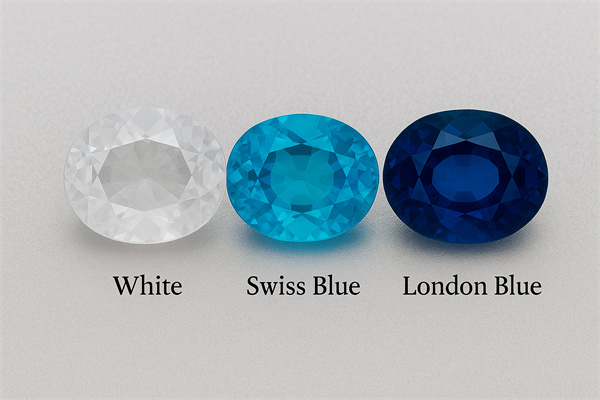
One of the best-known examples is blue topaz, which rarely occurs in deep shades naturally. Most of the striking Swiss Blue or London Blue varieties available on the market are the result of irradiation, sometimes followed by additional heating. Without this process, topaz would primarily be colorless or pale. Similarly, diamonds can undergo irradiation to achieve rare hues such as green, yellow, or even black, providing buyers with affordable alternatives to naturally fancy-colored diamonds. Irradiation is also applied to pearls, especially freshwater varieties, to enhance their depth of tone or create unusual shades.
A common question is whether irradiated gemstones are safe. The answer is yes—when performed correctly. After treatment, gems are carefully tested to ensure they do not retain harmful radiation before entering the jewelry market. Regulatory bodies worldwide strictly monitor this practice, guaranteeing that irradiated gems are safe for everyday wear.
The durability of irradiation results varies. In most cases, such as blue topaz or irradiated diamonds, the new colors are stable and permanent under normal conditions. However, prolonged exposure to high heat or strong sunlight may cause slight fading in some gems.
For buyers, disclosure is again essential. While irradiated stones are widely accepted, untreated natural colors are always more valuable. Understanding the difference helps collectors and jewelry lovers appreciate both the beauty and affordability that irradiation offers.
Dyeing Treatment
Dyeing is one of the oldest and simplest methods of gemstone enhancement. It involves introducing artificial color into a gemstone, usually through fractures, pores, or surface cavities. While this treatment can dramatically change a stone’s appearance, it is considered less durable and less valuable than natural or permanent enhancements such as heating. Still, dyeing remains popular because it allows otherwise plain stones to enter the jewelry market with vibrant hues.
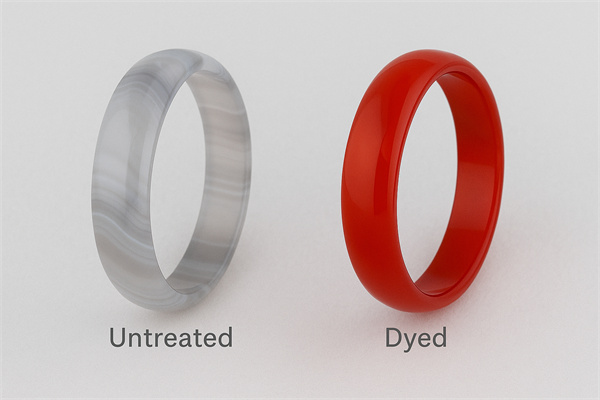
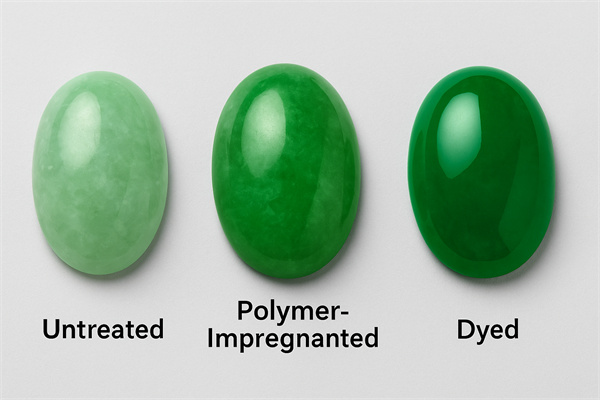
Agate is perhaps the most famous example of dyed gemstones. Because agate has a porous structure, it readily absorbs dyes, resulting in bright blues, greens, reds, and purples that are rarely found in nature. Dyed agates are commonly used in decorative objects, beads, and affordable jewelry. Similarly, jade—especially lower-quality varieties—may be dyed to achieve a richer green tone that mimics premium jadeite. While visually appealing, these stones typically command a much lower price compared to untreated jade.
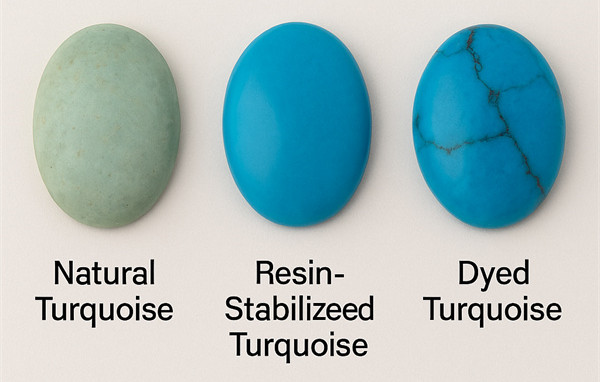
Turquoise is another gem frequently treated with dye, often combined with resin stabilization to strengthen the stone. Natural turquoise can be soft and pale, so dyeing enhances its color while resin improves durability. Pearls, particularly cultured freshwater types, are also dyed to produce shades like black, silver-gray, or golden tones, expanding design possibilities for jewelers.
The biggest drawback of dyeing is its lack of permanence. Over time, exposure to sunlight, moisture, or household chemicals can cause dyed colors to fade or bleed. Gemologists often advise buyers to treat dyed gems with extra care, avoiding harsh cleaning solutions.
From an ethical standpoint, dyed gemstones should always be sold with full disclosure. While they provide affordability and aesthetic variety, they cannot be compared in value to untreated or more stable enhancements. For consumers, recognizing dyed stones ensures realistic expectations and helps them enjoy these gems for their decorative and playful qualities.
Other Common Treatments
Beyond heating, irradiation, and dyeing, the gemstone industry employs several other treatments to improve a stone’s color, clarity, or durability. While some of these methods are widely accepted, others are more controversial due to their temporary effects or the difficulty of detection.
Bleaching is most commonly used on pearls and jade. In pearls, bleaching lightens and evens out their color, giving them a more uniform appearance. In jade, bleaching removes brownish stains and improves transparency, often followed by polymer impregnation for stability.
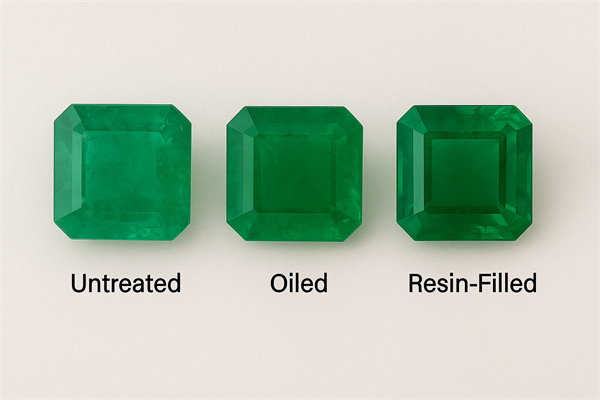
Oiling and resin filling are traditional treatments applied to emeralds. Because emeralds often contain fractures and inclusions, oiling fills these gaps to improve transparency and enhance color. While natural cedarwood oil has been used for centuries, modern techniques may involve synthetic resins. This treatment is widely accepted, but the degree of filling—minor, moderate, or significant—greatly impacts value.
Diffusion treatment is another enhancement, primarily used in sapphires. By heating stones with certain chemicals, a thin layer of color penetrates the surface, creating a more vivid hue. While this produces striking results, diffusion color is often limited to the outer layers of the gem and can be lost if the stone is recut or damaged.
Finally, surface coating involves applying a thin film to gemstones like quartz or topaz to alter or intensify their color. These coatings can create iridescent effects or rare hues but are prone to scratching and wear over time.
In summary, while these treatments enhance beauty and expand design possibilities, they also raise important questions about durability and transparency. Buyers should always ask for treatment disclosures and, when possible, request certification from a reputable gemological laboratory.
Identifying Treated Gemstones
For buyers and collectors, the ability to identify whether a gemstone has been treated is essential. Treatments often affect not only a gem’s beauty but also its market value, durability, and long-term care. While some enhancements—like heating—are nearly impossible to detect without specialized equipment, there are both simple clues for everyday buyers and advanced methods used by gemological laboratories.
At home, one of the easiest ways to suspect treatment is by observing color uniformity. Dyed stones, such as agate or turquoise, often show overly bright or unnatural hues that do not occur in nature. If you inspect the stone under magnification, you may notice concentrations of dye in cracks or near the surface. Similarly, coated gemstones may reveal thin films of color that wear off at the edges. For pearls, uneven tones or overly glossy finishes can suggest bleaching or dyeing.
Professional identification, however, is more reliable. Reputable labs such as the Gemological Institute of America (GIA) or the International Gemological Institute (IGI) use advanced techniques like spectroscopy, infrared analysis, and X-rays to detect treatments. For example, oiling in emeralds can be confirmed by examining the way light passes through filled fractures, while diffusion-treated sapphires display color concentrations limited to surface layers.
Certificates from these labs provide transparency by stating whether a gem is natural, synthetic, or treated, and if treated, what method was used. This documentation is especially important for high-value purchases like engagement rings or investment-grade gems, where untreated stones typically command a significant premium.
In short, while basic observations can help buyers spot obvious treatments, laboratory testing remains the gold standard. Purchasing gemstones from trusted suppliers who provide full disclosure and certification ensures peace of mind and safeguards the value of your jewelry investment.
Ethical and Market Perspectives
The use of treatments in gemstones raises important questions about ethics, value, and consumer trust. While enhancements like heating or oiling are widely accepted in the jewelry trade, transparency is the key factor that determines whether these practices are viewed positively or negatively.
In today’s market, disclosure is not just good practice—it is a responsibility. Jewelers and wholesalers are expected to inform customers about any treatments a gemstone has undergone. This ensures buyers know exactly what they are paying for, whether it is a heated sapphire, an irradiated blue topaz, or an oiled emerald. Failure to disclose treatments can mislead consumers, damage trust, and even harm the reputation of entire jewelry brands.
From a value standpoint, untreated stones almost always command higher prices than their treated counterparts. A natural, “no-heat” ruby, for example, may sell for several times more than a heated ruby of similar appearance. Similarly, an emerald with minor oiling will be valued higher than one with significant resin filling. Treatments, therefore, directly influence a gem’s investment potential, making disclosure crucial for collectors and investors.
At the same time, treated gems have their place in the industry. They make beautiful jewelry more affordable and accessible to a broader audience. Many buyers of engagement rings, for instance, prioritize aesthetics and durability over rarity. For them, a treated gemstone can offer excellent value without compromising beauty.
Ultimately, the ethical debate comes down to honesty and choice. When jewelers provide full disclosure, consumers can decide whether they want to pay a premium for untreated gems or enjoy the affordability of treated ones. This transparency strengthens trust between sellers and buyers, ensuring the gemstone trade remains both sustainable and credible in the global market.
Conclusion
Gemstone treatments have played a central role in the jewelry world for centuries. From the deep blues created by heating sapphires, to the vivid hues achieved through irradiation, to the colorful transformations brought by dyeing, these enhancements make gemstones more beautiful, durable, and accessible. For many buyers, treated stones provide an affordable way to enjoy the brilliance of gems that would otherwise be rare or unattainable.
Yet, the conversation around treatments is not only about beauty but also about trust. Full disclosure is essential. Whether a stone has been heated, oiled, dyed, or irradiated, customers deserve to know its history so they can make informed choices. Untreated gems remain the pinnacle of rarity and value, but treated gemstones also have their place, offering exceptional visual appeal at more approachable price points.
For collectors and jewelry lovers, the key lies in transparency. Certifications from trusted labs and reputable sellers provide peace of mind, ensuring that every purchase is both an aesthetic delight and a sound investment. In the end, the beauty of a gemstone is not diminished by its treatment—the honesty and craftsmanship behind it enhances it.
✨ At Tianyu Gems, we believe in combining artistry with transparency. With over 25 years of expertise in gemstone cutting and jewelry customization, we guarantee the quality of every gem—whether natural, lab-grown, or carefully treated. If you are looking for sapphires, emeralds, moissanite, or a custom-designed piece, visit us at tygems.net to explore our collections and speak with our experts. Let us help you find a gemstone that matches your story—brilliant, unique, and timeless.
