



Gold-Plated vs. Raw Brass: Which Material Suits Your Lifestyle?
I. Introduction: Material Choices as Lifestyle Statements
In the realms of jewelry selection and home décor, the choice of material is rarely just an aesthetic calculation; it is often a silent yet profound expression of one's lifestyle attitude. Gold-plated and raw brass (unplated brass), two of the most prominent materials in contemporary accessories and interior design, have each captivated distinct audiences through their unique textures and properties.
The distinction between the two extends far beyond surface color and tactile feel. They deeply align with differing consumption habits, maintenance philosophies, and functional needs. Some gravitate toward the opulent refinement of gold plating, seeking a consistently high-end aesthetic. Others find solace in the natural authenticity of raw brass, enjoying the unique charm that evolves with time and oxidation. Choosing between these materials is essentially choosing a companion that resonates with your personal state of being. This article dissects the core differences between these materials—from their essence and key characteristics to their suitability for specific scenarios—providing a precise guide for your lifestyle.
II. Core Understanding: The Essence of the Materials
1. Gold-Plated: Surface Texture and Visual Premium
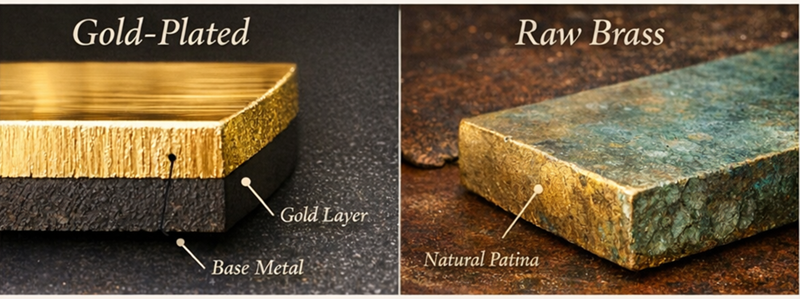
Gold plating is not solid gold; rather, it is a process that uses electrolysis to deposit a thin layer of gold onto a base metal such as copper, silver, an alloy, or stainless steel. Its value and quality depend entirely on the thickness of the plating and the base material. The industry generally categorizes gold plating into three tiers:
■ Flash Plating (0.1-0.3μm): Simple processing and low cost.
■ Heavy Gold Plating (≥1μm): Offers texture closer to solid gold with greater stability.
■ Gold Vermeil/Filled (≥2.5μm): The most complex process, costing nearly as much as some karat gold, offering superior durability.
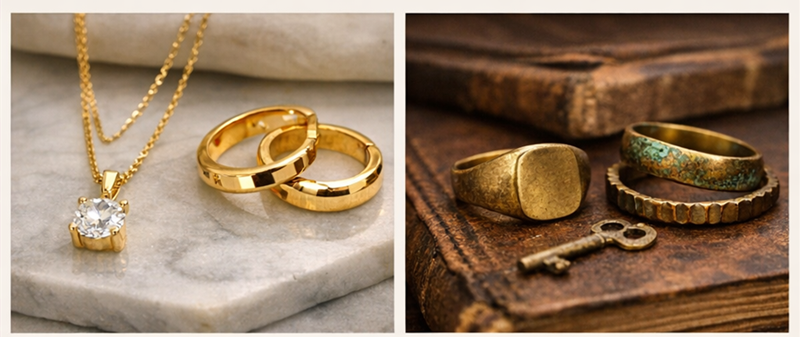
The primary advantage of gold plating lies in its visual expression. It delivers a full, uniform luster and a luxurious texture that instantly elevates an item’s perceived value, perfectly replicating the nobility of pure gold without the exorbitant price tag. This visual premium makes it ideal for jewelry, high-end home accents, and electronic accessories that require a polished, "perfect" look.
2. Raw Brass: Natural Grain and Time-Worn Texture
Raw brass is an alloy consisting primarily of copper (60-70%) and zinc (30-40%). Without any surface treatment, it naturally presents a warm, mellow yellow tone, retaining the metal's native subtle grain and slight roughness. Compared to pure copper, brass boasts superior physical properties—higher hardness and wear resistance—while maintaining excellent plasticity for forging and engraving.
The most distinctive characteristic of raw brass is its "living" nature. Exposed to air, humidity, and touch, brass undergoes a gradual oxidation reaction. It transitions from a bright, warm yellow to deep brown, or even develops a blue-green patina. This is not damage, but rather a trace of time settling on the object. Every piece of brass develops a unique oxidation trajectory, embodying a blend of vintage charm and sturdy industrial aesthetics.
III. Key Comparisons: Gold-Plated vs. Raw Brass
1. Aesthetic Style: Refined Elegance vs. Authentic Character
Gold-plated pieces are visually consistent, polished, and luxurious. They project sophistication and are well-suited for formal wear, modern interiors, and classic fashion styles. Their appeal lies in perfection—smooth surfaces, even color, and immediate elegance.
Raw brass, on the other hand, celebrates imperfection. Its warm tone and evolving patina align beautifully with vintage, industrial, wabi-sabi, and artisanal aesthetics. No two pieces look the same over time, making brass ideal for those who value individuality over uniformity.
2. Durability: Protective Coating vs. Material Integrity
Gold-plated durability depends entirely on the integrity of its surface layer. Thin plating wears quickly with friction, sweat, or cosmetics, exposing the base metal underneath. Thicker plating lasts longer but still requires care.
Raw brass has no coating to fail. Minor scratches or wear do not compromise its structure. In fact, oxidation forms a protective patina that can enhance durability and appearance rather than diminish it.
3. Maintenance Difficulty: Delicate Care vs. Effortless Ease
Gold-plated items require meticulous maintenance and are often considered a “high-maintenance” material. In daily use, they must be carefully protected from impacts and friction to prevent damage to the thin gold layer. They should also be kept away from cosmetics, perfumes, sweat, seawater, and similar substances, as these can accelerate oxidation and corrosion, leading to discoloration or darkening. After wearing or use, the surface should be gently wiped with a soft cotton cloth to remove residue, then stored in a sealed bag or jewelry box to protect it from moisture and prolonged air exposure. For thin gold-plated pieces in particular, frequent wear should be avoided, as they can lose their shine quickly. Overall, gold-plated items involve higher maintenance costs and offer very little margin for error, making them best suited for those with the time and patience to care for them properly.
Raw brass, by contrast, is a highly forgiving, “low-maintenance” material. It requires little to no special care in everyday use and has a high tolerance for wear. It can come into direct contact with skin and moisture, and even if it becomes dirty, simply rinsing it with water and drying it is usually sufficient. The appearance of oxidized brass is entirely a matter of personal preference: if you prefer its original warm golden tone, light sanding or polishing with a cloth can easily restore the surface; if you enjoy the vintage look of patina, you can simply let the oxidation develop naturally. Each touch and each use contributes to its unique character. This “no-fuss, better-with-time” quality makes raw brass an ideal choice for busy, relaxed, and practical lifestyles.
4. Cost and Long-Term Value
Gold-plated items often carry a higher upfront cost due to labor and visual appeal, but thin plating can wear out quickly and is costly to restore.
Raw brass is affordable, long-lasting, and easy to refresh. Over time, it delivers better value, especially for daily-use or long-term pieces.
5. Sustainability and Environmental Impact
Gold plating involves chemical processes and waste management challenges. Lower-quality plating may also contain harmful metals.
Raw brass is environmentally friendly, highly recyclable, and free from chemical surface treatments, making it a strong choice for sustainable living.
IV. Scenario Matching: Which Fits You?
The Gold-Plated Persona
Choose gold-plated if you value outward texture and refinement. This material suits those who:
■ Frequent formal social occasions, weddings, or business gatherings.
■ Focus on professional image management requiring polished accessories.
■ Prefer the "forever new" look and are willing to invest time in careful storage and cleaning.
The Raw Brass Persona
Choose raw brass if you prefer vintage style, personalization, and low maintenance. This material suits those who:
■ Identify with retro, industrial, or minimalist aesthetics.
■ Lead busy lives and prefer items that don't need "babysitting."
■ Enjoy the concept of "wabi-sabi"—finding beauty in imperfection and age.
■ Prioritize eco-friendly, sustainable consumption.
V. Common Misconceptions Explained: Clearing Up Material Selection Bias
When choosing between gold-plated items and raw brass, many people make unsuitable decisions due to common misunderstandings. The following misconceptions are worth addressing:
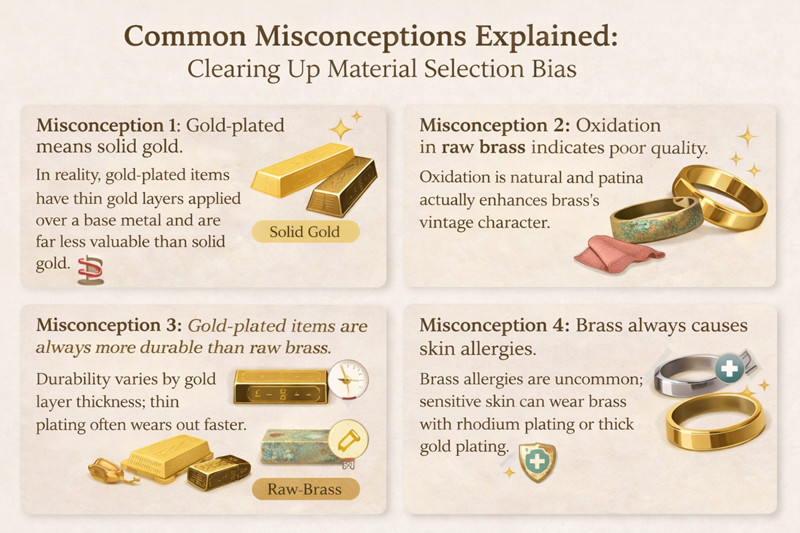
Misconception 1: Gold-plated means solid gold.
In reality, gold-plated items have thin gold layers applied over a base metal. No matter how thick the gold layer is, gold-plated products are not solid gold and are far less valuable than solid gold materials such as pure gold or K gold. Even gold-filled or heavy gold-plated pieces, while closer in appearance and feel to K gold, are still classified as plated products. It is important to distinguish between these materials when purchasing to avoid misjudgments based solely on appearance.
Misconception 2: Oxidation in raw brass indicates poor quality.
Oxidation is a natural chemical property of brass and has nothing to do with material quality. On the contrary, the patina formed through oxidation is a visible mark of time that enhances brass’s vintage character and individuality. It is not damaged. If the oxidized appearance is undesirable, simple polishing can restore the original color without affecting functionality or longevity.
Misconception 3: Gold-plated items are always more durable than raw brass.
Durability depends largely on the thickness of the gold layer and how the item is used. Thin gold plating wears and fades easily and can be less durable than raw brass. Thicker gold plating or gold-filled items offer better durability, but they can still be damaged if not properly maintained. Therefore, durability should be evaluated based on usage scenarios rather than assumptions.
Misconception 4: Brass always causes skin allergies.
Because brass contains zinc, a small number of people with sensitive skin may experience redness or irritation. However, this is uncommon, and most people wear brass without discomfort. Those with sensitivities can choose brass items with a rhodium-plated base, which creates a barrier between the skin and the metal, or opt for thick gold-plated products to balance style with wearing comfort.
VI. Decision Guide
Still undecided? Follow these three steps:
1. Define Your Core Need: Do you want standardized perfection (Gold-Plated) or unique character (Brass)?
2. Assess Maintenance Capacity: Can you commit to careful storage and cleaning (Gold-Plated), or do you want a "wash and wear" item (Brass)?
3. Match the Environment: Is the setting formal and luxurious (Gold-Plated) or casual and artistic (Brass)?
VII. Conclusion
There is no absolute superiority between gold-plated and raw brass; there is only suitability. Gold plating satisfies the pursuit of high-end visual perfection, ideal for the "exquisite" lifestyle. Raw brass accepts the traces of time, resonating with those who seek authenticity and a connection to their objects.
Ultimately, choosing a material is not just about comparing appearance or price—it is about selecting an object that vibrates at the same frequency as your life. Choose the one that tells your story best.
