



Why Does Your Silver Jewelry Turn Black Over Time? A Deep Dive into Silver Care Myths and Truths
Elegant silver jewelry lends a soft touch of sophistication to any ensemble. Whether it’s an everyday necklace, a dainty bracelet, or a sentimental silver piece, it remains a beloved accessory for countless people. Yet one common frustration persists: silver that sparkles brightly when new gradually fades, tarnishes, and loses its luster over time. Some claim this is a sign of the body “detoxing,” while others question the jewelry’s quality. Today, we’ll demystify silver tarnishing, debunk prevalent maintenance myths, and share science-backed, practical tips to keep your silver looking pristine.
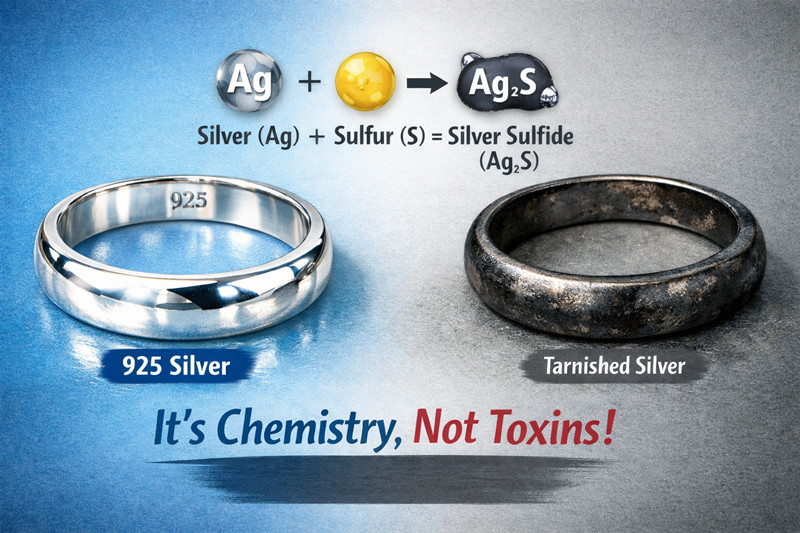
I. Myth Busting: Silver Tarnish ≠ Body Detox
The myth that “silver tarnishes due to body detoxification” has persisted for years, even being promoted by some retailers to mislead consumers. It likely originates from the ancient practice of “silver needle toxin testing,” documented in Song Ci’s Collected Cases of Injustice Rectified. In ancient times, arsenic purification techniques were crude, leaving the final product with high sulfur concentrations. When silver came into contact with this sulfur, it formed black silver sulfide, signaling the presence of poison. However, this historical context is irrelevant to modern silver care.
Modern science confirms that silver tarnish has absolutely nothing to do with body detox. The true culprits are sulfide ions in human sweat and trace amounts of hydrogen sulfide in the air. All individuals—regardless of their health status—secrete small quantities of sulfur through sweat as part of normal metabolic processes, and this is in no way linked to “toxins.” Even when not worn, silver slowly tarnishes when exposed to air, proving that tarnishing is a natural chemical reaction rather than a reflection of your body's condition.
II. The Truth Unveiled: Chemical Principles and Factors Behind Silver Tarnish
1. Core Chemical Reaction: Silver’s Reaction with Sulfur
At its core, silver tarnish occurs when silver reacts chemically with sulfur in the environment, forming a black film of silver sulfide (Ag₂S) that gradually coats the surface and diminishes its shine. Additionally, silver oxidizes slowly in air to form silver oxide (Ag₂O), which also causes yellowing or tarnishing—though this process is far slower than sulfidation.
Most everyday silver jewelry is crafted from sterling silver (92.5% silver, 7.5% other metals). Fine silver (99.9% pure) boasts greater chemical stability but is too soft to maintain its shape. The alloy metals in sterling silver enhance durability but slightly accelerate sulfidation, which is one reason sterling silver tarnishes faster than fine silver. Beyond these staples, oxidized silver and rhodium-plated silver are also popular in the European and American markets, each with unique properties and care needs.
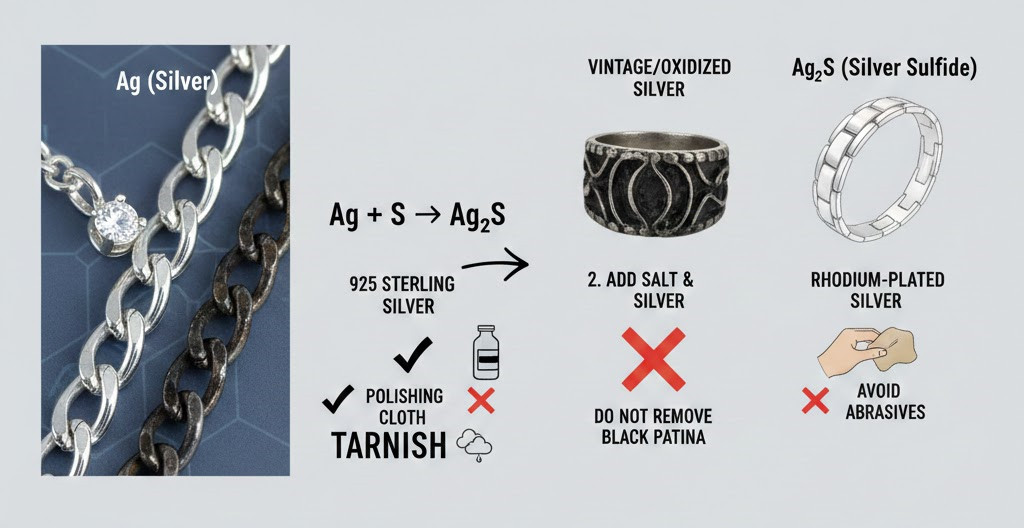
Oxidized Silver: This type of silver undergoes a deliberate chemical treatment to create a dark, antiqued finish, which is highly sought after for its vintage aesthetic. Unlike natural tarnish, the oxidized layer is intentionally applied and designed to last. It is more resistant to wear than surface patina but can fade over time with frequent friction.
Rhodium-Plated Silver: Rhodium, a rare and durable precious metal, is plated onto silver to form a protective barrier. This plating enhances silver’s shine (imparting a bright, white gold-like luster) and completely prevents tarnishing. However, the rhodium layer will wear thin with prolonged use, especially on high-friction areas like bracelet links or ring bands, revealing the underlying silver, which may then tarnish.
2. Three Key Factors Accelerating Silver Tarnish
The rate at which silver tarnishes varies dramatically based on individual physiology, lifestyle, and environmental conditions. Below are three key factors that speed up tarnishing:
■ Body Chemistry Differences: Individuals with acidic skin or excessive perspiration have higher levels of sulfide and chloride ions in their sweat. These ions create a “silver-sweat-air” galvanic cell, accelerating both oxidation and sulfidation. Furthermore, consuming large amounts of sulfur-rich foods (such as garlic or onions) over a short period increases sweat sulfur content, doubling the rate of tarnish.
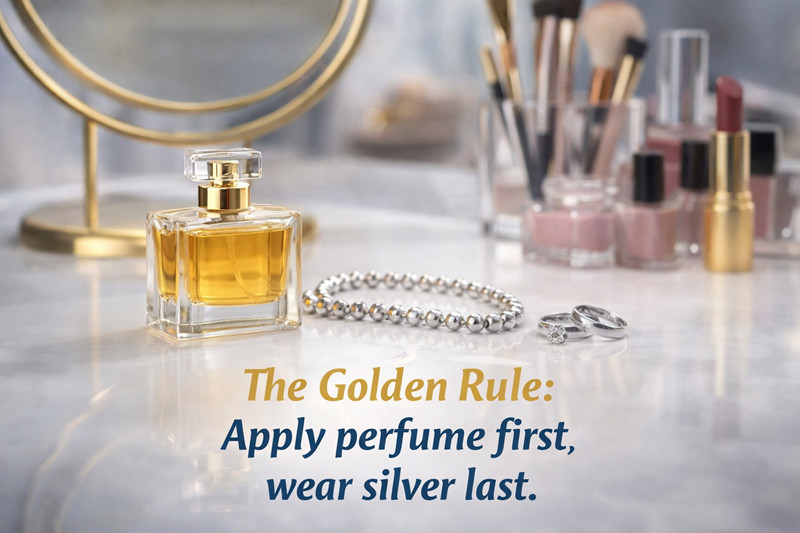
■ Chemical Exposure: Ingredients in cosmetics, perfume, hairspray, and skincare products—along with sulfur soap, body wash, and detergents—react with silver to speed up tarnishing. Sulfides in perfume and cosmetics directly trigger the formation of silver sulfide, which is why we recommend putting on silver jewelry after applying makeup and fragrance.
■ Environmental & Occasion Factors: High temperature and humidity (e.g., in humid subtropical climates) accelerate reactions between silver and air. Minerals in seawater and hot spring water corrode silver surfaces and promote sulfidation—always remove silver jewelry before swimming or visiting hot springs. Environments with high sulfur levels, such as industrial areas or polluted regions, also expedite tarnishing.
III. Common Silver Care Mistakes to Avoid
When silver tarnishes, many people rush to try unproven “home remedies” without realizing they can cause irreversible damage. Steer clear of these three common mistakes:
Mistake 1: Scrubbing with Toothpaste or Dish Soap
Abrasive particles in toothpaste leave micro-scratches on silver, dulling its shine and roughening its surface over time. Dish soap only removes surface oil—it is ineffective against silver sulfide—and its chemicals can accelerate future tarnishing. Similarly, erasers and steel wool act as “destructive physical cleaners”: while they may remove minor tarnish, they scratch the surface, making them particularly harmful to gem-set silver or engraved silver.
Mistake 2: Frequent Soaking in Silver Cleaner
Silver cleaner removes tarnish quickly but is highly corrosive. Its mechanism dissolves not only surface silver sulfide but also a thin layer of silver itself. Overuse thins the silver, renders it brittle, and can loosen gem settings. Even for heavily tarnished pieces, limit soaking to no more than one minute, then rinse thoroughly with clean water and dry immediately to prevent residual damage.
Mistake 3: Using the Same Cleaning Method for All Silver
Specialized silver varieties—such as Thai silver, Tibetan silver, silver-plated jewelry, oxidized silver, and rhodium-plated silver—require different care than standard sterling silver. As highlighted in articles about top silver jewelry brands in China, craftsmanship varies, and so does maintenance. Thai silver’s black patina is a deliberate vintage effect; clean it only with a soft cloth, and never attempt to remove it. Traditional Tibetan silver is actually a copper-nickel alloy with minimal silver content; its tarnish stems from copper oxidation, so clean it gently with diluted vinegar or lemon juice. Silver-plated jewelry features a thin layer of silver or gold—avoid all chemical cleaners and wipe it only with a dry, soft cloth.
For oxidized silver, avoid harsh cleaners and abrasive tools entirely, as they will strip the intentional dark finish. Simply wipe with a dry, lint-free cloth to remove dust and oils; if needed, lightly dampen the cloth with distilled water (avoid tap water with minerals) and pat dry immediately. Avoid soaking or scrubbing, as this accelerates finish fading.
For rhodium-plated silver, the key is to preserve the plating. Avoid contact with abrasive surfaces and harsh chemicals (including chlorine and perfume) to prevent scratching or wearing the rhodium layer. Do not use silver polish cloths, as they are too abrasive and will wear down the plating. Clean only with a soft, damp cloth and dry thoroughly—once the plating wears thin, professional re-plating is the only way to restore its tarnish-resistant finish.
IV. Scientific Care: Tips for Long-Lasting Silver Shine
1. Daily Wear: Prioritize Protective Habits
Prevention is always better than correction. Simple daily habits can significantly slow tarnishing: Always put on silver jewelry after applying makeup, fragrance, and skincare products—wait until they are fully absorbed to avoid direct chemical contact. Remove silver before bathing, swimming, or visiting hot springs, as prolonged exposure to water and minerals accelerates damage. After exercising, wipe sweat off the silver immediately with a soft cloth to keep it dry.
Additionally, avoid wearing silver with other precious metals to prevent scratches and dents. Keep silver away from sulfur soap, mothballs, and other sulfur-containing items to reduce sulfidation.
2. Cleaning Tips: Choose the Right Method for the Job
■ Minor Tarnish (Dullness, No Black Spots): Use a specialized silver polishing cloth. These cloths contain mild polishing agents and protectants that remove surface oxidation without causing damage. Never wash the cloth—this washes away the protective ingredients.
■ Heavy Tarnish (Visible Black Spots): Try the aluminum foil-salt method, a safe and effective home solution. Line a bowl with aluminum foil (shiny side up), place the silver inside, add 1 tablespoon of salt and a pinch of baking soda, then pour boiling water over the mixture. Soak for 5-10 minutes—the chemical reaction converts silver sulfide back to silver. Rinse with clean water and dry with a soft cloth. Note: Avoid this method for gem-set silver, as high heat may damage adhesive settings.
■ Specialty Silver: For gem-set or pearl-adorned silver, avoid full immersion. Instead, use a cotton swab dipped in water or a specialized silver cleaner to gently wipe only the silver components. For antiqued silver, clean only the bright areas—avoid the intentional patina to preserve its vintage aesthetic. For oxidized silver, stick to dry wiping or mild distilled water cleaning to protect the intentional dark finish. For rhodium-plated silver, use only soft, damp cloths and avoid abrasive tools or polishes that damage the plating. For more detailed advice, check our comprehensive jewelry care guide.
3. Storage: Protect from Air and Moisture
Proper storage directly impacts how quickly silver tarnishes when not in use. Store each piece individually in an airtight bag or jewelry box to minimize air exposure. Place desiccant packets in storage areas to absorb moisture—this is especially critical in humid climates. For long-term storage, apply a thin layer of clear nail polish to silver (test on an inconspicuous area first to avoid corrosion) to create a protective barrier. Wipe the silver with a polishing cloth monthly to maintain its shine.
For oxidized silver, store it in a separate soft pouch to reduce friction, which can cause the finish to fade. Avoid storing in humid environments, as moisture can accelerate finish degradation. For rhodium-plated silver, store individually to prevent scratching the plating against other jewelry, and keep away from sulfur-containing items (like mothballs) that can affect the underlying silver once the plating wears thin.
Conclusion
Silver tarnish is neither a sign of poor quality nor a sign of body detox—it is a natural chemical reaction between silver and sulfur. By mastering science-backed maintenance tips and avoiding common mistakes, you can slow tarnishing and extend your silver jewelry’s lifespan. A well-cared-for silver piece retains its bright shine, accompanying you for years while holding both sentimental and stylistic value. Start today—treat your silver right, and let its soft glow endure.
At Tianyu Gems, we specialize in high-end gem processing and custom jewelry manufacturing, including solid gold and premium sterling silver fine jewelry. Explore our collection to find timeless pieces that deserve the best care.
