



The Complete Guide to Sterling Silver Jewelry: Understanding Quality, Sensitivity, and Longevity
For jewelry enthusiasts and individuals with sensitive skin alike, understanding the science behind sterling silver is essential to making informed choices and maintaining beautiful pieces that last. This comprehensive guide combines expert metallurgical knowledge with practical care advice, covering topics from electroplating chemistry to allergy prevention for individuals with reactive skin.
The Foundation of Quality Silver Jewelry
Understanding 925 Sterling Silver Composition
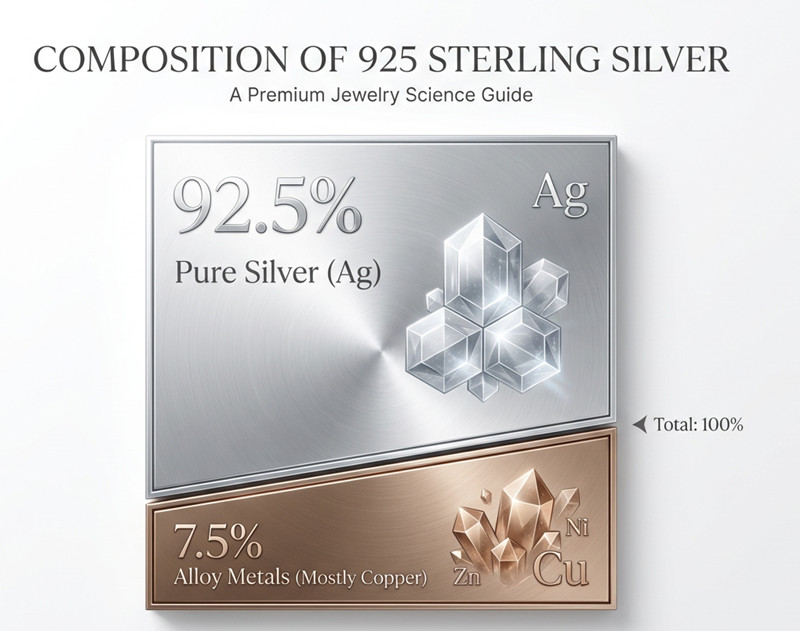
Pure silver (99.9%) is extraordinarily beautiful but impractically soft for everyday wear. To create jewelry that withstands the rigors of daily life, the jewelry industry developed 925 Sterling Silver—a precisely engineered alloy containing 92.5% pure silver and 7.5% strengthening metals, typically copper.
This copper addition transforms silver from a delicate material into a durable foundation capable of supporting intricate designs, gemstone settings, and complex shapes. However, this composition also introduces considerations for both longevity and skin sensitivity that every wearer should understand.
The Chemistry Behind Silver’s Behavior
Silver is classified as a “living metal” because it continuously interacts with its environment. When exposed to sulfur compounds (present in air, cosmetics, and even human sweat) or atmospheric oxygen, silver undergoes chemical reactions producing silver sulfide—the black tarnish that gradually dulls its lustrous surface.
Understanding this fundamental chemistry is crucial because it explains why even the highest-quality silver jewelry requires maintenance and why certain care practices can dramatically extend a piece’s lifespan and appearance.
The Art and Science of Electroplating
Multi-Tone Plating: A Technical Marvel
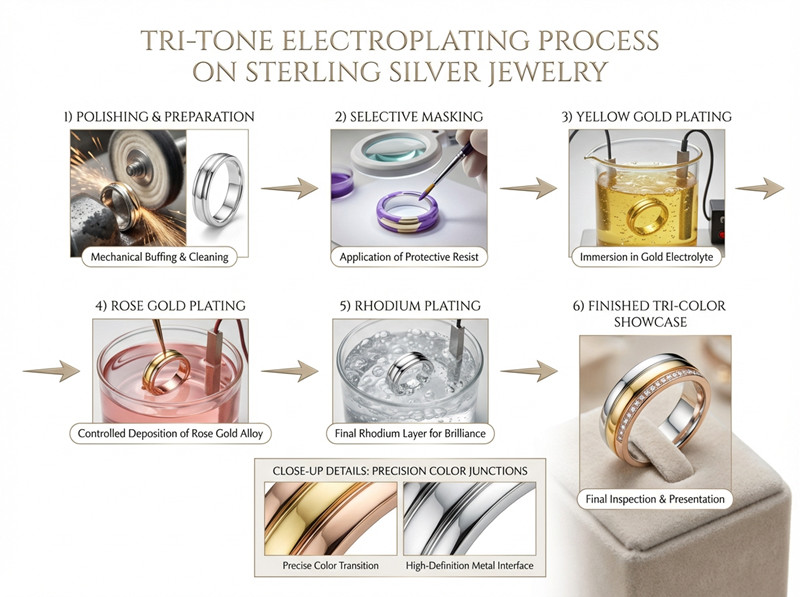
Creating jewelry with multiple metal finishes on a sterling silver base is among the most technically demanding achievements in modern jewelry craftsmanship. Consider the tri-color ring featuring Yellow Gold, Rose Gold, and White Gold (Rhodium) on a single band—a piece that requires extraordinary precision.
The process, known as selective masking, involves:
1. Surface Preparation: Polishing the silver to microscopic smoothness to ensure optimal metal bonding
2. Selective Masking: Applying specialized liquid polymer to protect two-thirds of the ring
3. Sequential Plating: Submerging exposed areas in an 18K Yellow Gold electrolyte bath
4. Repetition: Removing and reapplying masks for Rose Gold and Rhodium sections
The molecular bond between these layers determines color longevity. When customers notice color changes within days, it often indicates surface tension issues where layers failed to fuse perfectly during the complex tri-tone transition.
The Micron Standard: Measuring Plating Quality
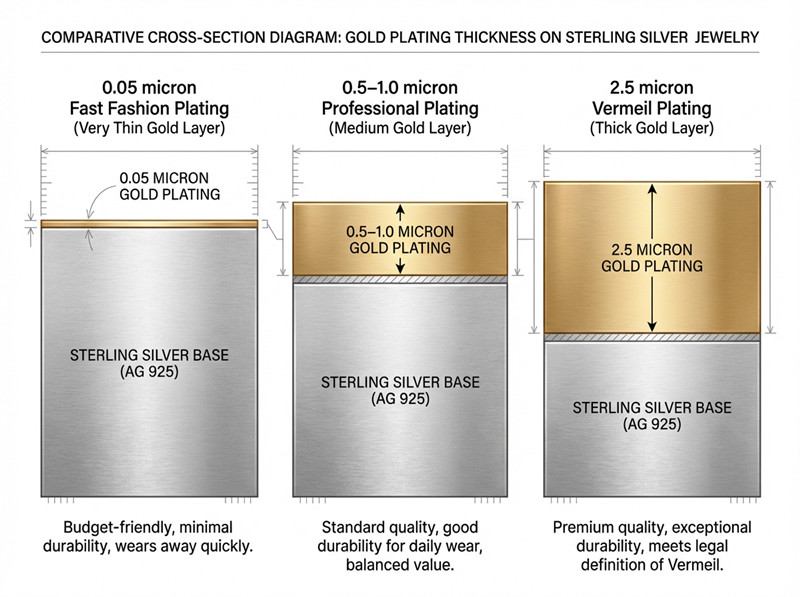
Plating thickness is measured in microns (1 μm = 0.001 mm), and this measurement directly correlates with durability:
· Commercial Plating (0.03-0.1 μm): Common in fast fashion jewelry; expected wear within days or weeks
· Professional Standard (0.5-1.0 μm): High-quality plating offering balanced color richness and durability
· Vermeil/Heavy Duty Plating (2.5 μm): Maximum thickness for silver jewelry, designed for prolonged lifespan
Even at 2.5 microns, gold plating remains a coating rather than a permanent transformation. Think of it as fine silk draped over a solid frame—beautiful and protective, but requiring care to maintain its integrity.
Why Color Fading Occurs—The Triple Threat
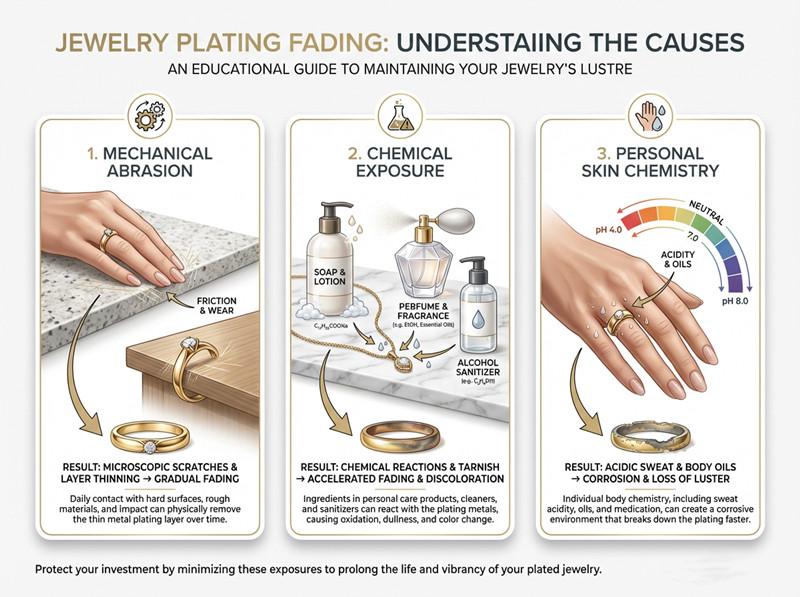
Even expertly plated jewelry can experience color changes, and understanding why empowers better care decisions.
Mechanical Abrasion: The Friction Factor
Rings, in particular, endure constant physical stress, repeatedly contacting hard surfaces such as desks, steering wheels, and cutlery. Dust and grit act as micro-abrasives, gradually wearing away microscopic layers of plating. In multi-colored pieces, the transition edges where colors meet are particularly vulnerable to this mechanical stress.
Chemical Corrosion: The Hidden Enemies
Modern daily life involves contact with numerous substances that aggressively dissolve electroplating:
· Surfactants: Found in soaps and detergents
· Alcohol: High-concentration hand sanitizers can weaken plating bonds
· Chlorine & Bromine: Swimming pools and hot tubs are primary enemies of Rhodium and Gold plating
· Sulfur Compounds: Present in certain skincare products and industrial atmospheres
Biological Variables: Personal Chemistry Matters
Perhaps the most misunderstood factor is individual body chemistry. Human sweat contains urea, lactic acid, and fatty acids, with each person possessing a unique pH level.
Acidic pH: Some individuals have more acidic skin chemistry, which acts as a natural electrolyte and accelerates plating delamination. When plating wears thin, exposed silver reacts with sweat, sometimes turning black or green—often misinterpreted as “gold falling off” when it’s actually the silver base reacting.
Atomic Diffusion: Over extended periods, atoms from the silver base migrate toward the surface while gold atoms migrate inward through a process called solid-state diffusion. This atomic mixing at the boundary dulls gold vibrancy, creating the appearance of color “fading into the metal.”
Sterling Silver and Sensitive Skin—Separating Fact from Fiction
The Truth About Silver Allergies
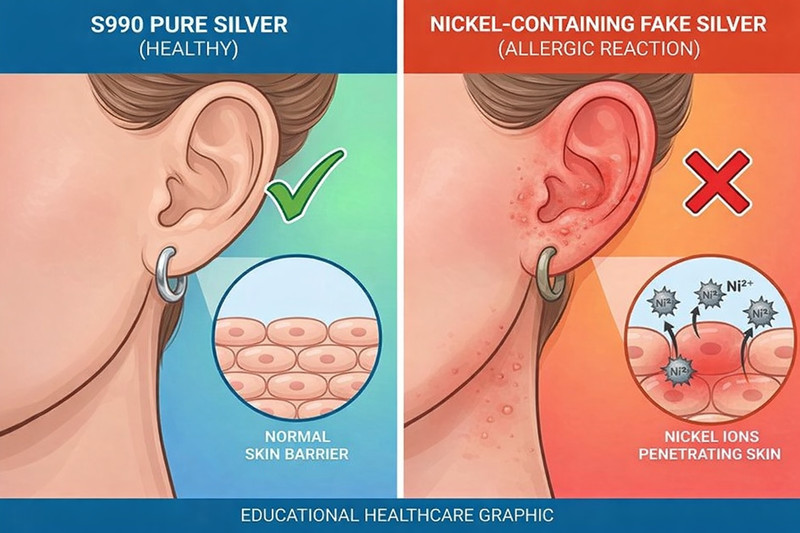
Many people with sensitive skin assume all silver jewelry will cause reactions, but scientific evidence tells a different story. Pure silver and high-purity sterling silver are actually low-allergen materials. According to dermatological research, pure silver (99%+ purity) rarely reacts with human sweat or skin secretions and doesn’t easily ionize to release allergenic signals that trigger immune system responses.
The Real Culprit: Most silver jewelry allergies stem from impurities and alloying metals, not silver itself. The primary offender is nickel, commonly added to inexpensive jewelry to increase hardness and luster. When exposed to the mildly acidic pH of human sweat, nickel rapidly releases ions that penetrate the skin’s protective layer, binding with skin proteins to create “complete antigens” that trigger delayed-type contact dermatitis—manifesting as redness, itching, rashes, or even blisters.
Particularly concerning are counterfeit “S925” pieces that are actually copper-nickel alloys, with some containing nickel and cadmium levels thousands of times above safe limits. Cadmium is classified as a Group I carcinogen with a biological half-life of 10-30 years, while lead accumulates through skin absorption, damaging kidneys and affecting blood cell formation.
Choosing Between S925 and S990 for Sensitive Skin
S990 Silver (Fine Silver)—The Low-Allergen Champion:
· 99% silver content with minimal allergenic impurities
· Ideal for sensitive skin and even infant jewelry
· Softer texture, more prone to scratching and deformation
· Oxidizes and tarnishes faster, requiring frequent maintenance
· Best for: Those prioritizing purity over durability
S925 Sterling Silver—The Practical Alternative:
· 92.5% silver with 7.5% alloy (usually copper) for durability
· Suitable for complex designs and gemstone settings
· More resistant to wear and deformation
· Potential concern: Rare copper sensitivity in some individuals
· Solution: Choose rhodium-plated S925 pieces
The Rhodium Solution for Sensitive Skin
Rhodium plating on S925 silver creates a protective barrier that prevents copper and other alloying metals from contacting skin while simultaneously preventing oxidation. Rhodium is a precious metal from the platinum family with superior chemical stability to silver.
However, rhodium’s hardness makes it somewhat brittle. If the underlying silver bends even slightly under pressure, the rigid rhodium layer can develop micro-cracks. Once moisture and sweat penetrate these cracks, they oxidize the underlying silver, causing the plating to flake or appear dull. Regular inspection and replating, when necessary, maintain protection.
The Scientific Care Protocol for Long-Lasting Beauty
Daily Wear Practices
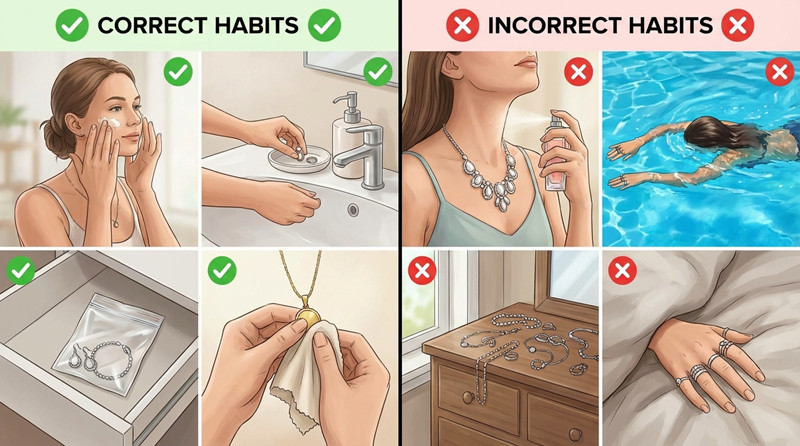
The “Last On, First Off” Rule: Jewelry should be the very last thing you put on after perfumes, lotions, and cosmetics have fully dried, and the first thing removed at night. This simple habit prevents chemical exposure that accounts for up to 60% of premature plating deterioration.
Activity Restrictions:
· Remove jewelry before bathing, swimming, exercising, or hot tub use
· Take off pieces during house cleaning or exposure to chemicals
· Avoid wearing during sleep to prevent mechanical stress
For Sensitive Skin Specifically:
· Wipe jewelry and skin contact areas dry after wear, especially in hot weather
· Allow skin “rest periods” by not wearing jewelry continuously
· Never wear jewelry on compromised skin (breakouts, cuts, sunburn)
Proper Cleaning Methods
For Non-Plated Sterling Silver:
· Use specialized silver polishing cloths for light tarnish
· Try the aluminum foil + salt water electrochemical method for moderate oxidation
· Reserve commercial silver cleaning solutions for severe tarnishing only
For Plated Jewelry (Critical Difference):
· NEVER use silver polishing cloths or dips on plated pieces—these abrasive products will strip the gold or rhodium coating
· Use only soft, damp microfiber cloths
· For deep cleaning, use mild soap and water, then dry thoroughly
Pre-Wear Preparation for Sensitive Skin:
· Clean new jewelry with alcohol wipes to remove manufacturing residues
· Conduct a 72-hour patch test on sensitive areas (behind the ear, inner wrist) before regular wear
· Rinse jewelry after cleaning to remove all chemical residues
Storage Protocols
Preventing Atmospheric Oxidation (90% reduction):
· Store each piece individually in airtight ziplock bags
· Include silica gel packets to maintain dryness
· Use velvet-lined compartments to prevent scratching
· Keep stored jewelry away from wool fabrics (which release sulfur compounds)
Long-Term Maintenance:
· Inspect stored pieces monthly
· Gently buff with a polishing cloth, even if not worn regularly
· For plain silver pieces, consider applying a thin coat of clear nail polish to create a temporary protective barrier (test on an inconspicuous area first)
Professional Maintenance Schedule
High-quality 925 Sterling Silver jewelry, like a performance vehicle, requires periodic professional servicing to maintain “showroom” condition:
· Every 6-12 months for daily-wear pieces: Professional “color refresh” involving stripping old oxidation, re-polishing the base metal, and applying fresh thick plating
· Annual inspection: Professional jeweler examination for structural integrity, prong tightness (gemstone settings), and plating condition
· After allergic reactions: Professional cleaning and possible re-plating to restore protective barriers
Setting Realistic Expectations
Fashion Fine Jewelry vs. Lifetime Pieces
Understanding the distinction between jewelry categories helps set appropriate expectations:
925 Sterling Silver with Plating (Fashion Fine Jewelry):
· Offers incredible design flexibility and accessible luxury
· Ideal for statement pieces and trend-setting designs
· Color is a serviceable layer requiring maintenance
· Expected lifespan with proper care: 1-3 years before re-plating is needed
· Cost-effective option for fashion-forward collections
Solid 18K Gold (High Jewelry):
· Ultimate choice for lifetime heirloom pieces
· Color runs through the entire metal—cannot fade
· Significantly higher initial investment
· Minimal maintenance requirements
· Best for: Wedding bands, family heirlooms, daily-wear classics
When Allergic Reactions Occur
Despite best practices, some individuals may still experience reactions. Proper response protocol:
1. Immediate removal: Take off jewelry and rinse skin with clean water
2. Mild reactions (slight redness, itching): Apply calamine lotion or mild hydrocortisone cream; avoid scratching
3. Severe reactions (blistering, weeping, spreading): Seek medical attention for prescription treatment
4. Post-recovery: Discontinue use of that specific piece and investigate material authenticity through professional testing
Conclusion: Informed Choices for Beautiful, Comfortable Wear
The supposed incompatibility between sensitive skin and silver jewelry is largely a myth rooted in quality issues rather than silver’s inherent properties. Pure silver and high-quality sterling silver are actually excellent choices for reactive skin when properly selected and maintained.
The key takeaways:
· Silver tarnishing is normal chemistry, not quality failure
· Plating requires maintenance, not permanent perfection
· Allergies typically stem from impurities, not silver itself
· Proper care extends lifespan dramatically—potentially by 300%
· Quality over price always proves more economical long-term
By understanding the metallurgy behind your jewelry, recognizing the role of individual body chemistry, and implementing scientific care protocols, you can enjoy the cool elegance of sterling silver for years while maintaining both its beauty and your skin’s comfort. The “fading” or tarnishing of silver jewelry isn’t failure—it’s a physical record of the piece’s journey with you, reflecting the environments you’ve explored and the life you’ve lived. With knowledge and care, these treasures continue shining brilliantly through it all.
