



925 Silver, Fine Silver, Silver Gold-Plated: A Complete Guide to Understanding Silver Jewelry Certifications
Walking into a jewelry store, you’re immediately confronted with a dazzling array of silver pieces marked with cryptic labels: “925 Sterling Silver,” “999 Fine Silver,” “Gold-Plated Silver.” For many shoppers, these designations create more confusion than clarity. Yet understanding these “identity certificates” is crucial—they directly determine the wearing experience, durability, value, and longevity of your silver jewelry investment.
Silver jewelry has captivated consumers worldwide with its lustrous elegance and accessible price point, particularly in European and American markets, where it has become a wardrobe staple. However, not all silver is created equal. The material composition fundamentally affects how your jewelry performs in daily wear, how it ages over time, and whether it’s worth your money. This comprehensive guide explains the three most common silver jewelry materials, covering their composition, characteristics, selection criteria, and maintenance requirements—empowering you to make informed decisions and avoid common purchasing pitfalls.
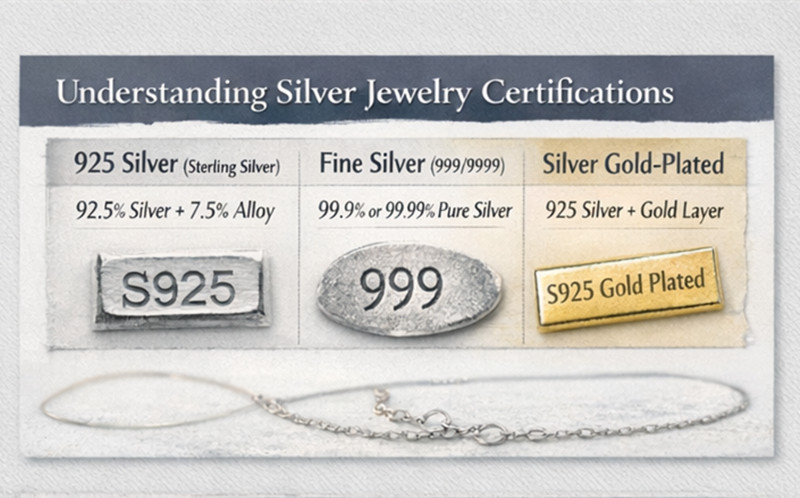
What Do Silver Jewelry Certifications Really Mean?
Silver jewelry certifications are not marketing terms—they are material standards that define the percentage of silver content and, indirectly, the performance of the jewelry.
Because pure silver is naturally soft, most wearable silver jewelry uses alloys or surface treatments to improve strength and appearance. Certifications such as 925, 999, or Gold-Plated indicate how the metal has been engineered for real-world use.
Understanding these standards allows you to:
Judge true material value
Predict durability and wear resistance
Avoid misleading descriptions
Choose the right jewelry for daily wear, gifting, or collection
The Essential Differences Between Three Types of Silver
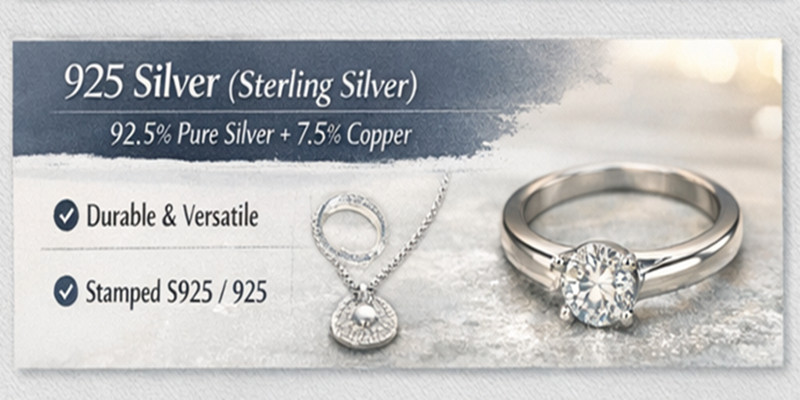
1. 925 Sterling Silver: The International Fashion Standard
Sterling silver, marked as “925” or “S925,” represents the globally recognized benchmark for silver jewelry. This standard was established in Britain in 1851 and has since been adopted by the United States, the European Union, and numerous other markets as the definitive measure of “pure silver” for jewelry. China’s national standards also recognize 925 silver as a premium-grade material and require clear markings on all authentic pieces.
Composition and Rationale
The “925” designation refers to the metal’s composition: 92.5% pure silver alloyed with 7.5% copper and other metals. This seemingly arbitrary ratio represents centuries of metallurgical refinement. Pure silver, while beautiful, suffers from excessive softness—with a Mohs hardness of only 2.5, it’s too malleable for practical jewelry applications. The addition of copper elevates the hardness to 2.7-3.0 on the Mohs scale, creating a material that maintains workability while gaining structural integrity.
This enhanced durability enables jewelers to execute intricate designs that would be impossible with pure silver: delicate filigree work, complex stone settings, hollow sculptures, and detailed engravings. It’s precisely this versatility that makes 925 sterling silver the material of choice for prestigious brands like Tiffany & Co., Pandora, and David Yurman.
Performance Characteristics
From a practical standpoint, 925 sterling silver demonstrates superior oxidation resistance compared to higher-purity fine silver. While all silver tarnishes when exposed to sulfur compounds in air, the copper alloy slows this process, meaning your jewelry maintains its luster longer during regular wear. Mechanical testing shows impressive durability: clasps withstand 5,000 open-close cycles without failure, making sterling silver well-suited for everyday pieces such as necklaces, bracelets, and rings worn in professional, social, and casual settings.
Considerations
One caveat: some individuals with metal sensitivities may occasionally react to trace amounts of nickel present in the copper alloy. If you have metal allergies, seek out “nickel-free” sterling silver variants, which use alternative hardening agents to achieve similar performance without nickel.
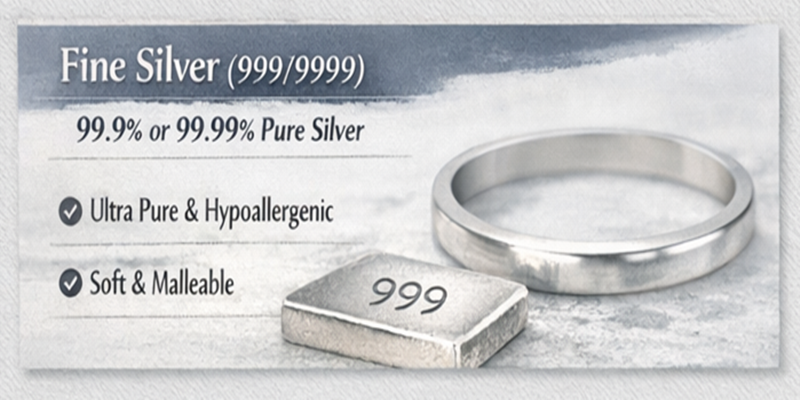
2. Fine Silver: The High-Purity Gentle Choice
Fine silver is a uniquely Chinese material classification with no direct international equivalents. Its defining characteristic is exceptional purity, available in several grades:
990 Fine Silver: Minimum 99.0% silver content
999 Fine Silver (also called “Thousand Fine Silver”): Minimum 99.9% silver
9999 Fine Silver (also called “Ten Thousand Fine Silver”): Minimum 99.99% silver
Distinctive Qualities
This extraordinary purity produces silver with a distinctly warm, bright white luster and exceptional softness. With a Mohs hardness of just 2.5-2.7, fine silver feels notably softer to the touch and demonstrates exceptional malleability. This softness translates to exceptional skin-friendliness—fine silver virtually never causes allergic reactions, making it ideal for sensitive skin, infants, elderly wearers, and anyone with documented metal sensitivities.
The cultural significance of fine silver in Chinese markets cannot be overstated. High purity symbolizes sincerity, purity, and value, making 999 and 9999 fine silver the preferred choice for meaningful gifts: baby longevity locks (changshou suo), elder-generation bracelets, commemorative pieces, and investment-grade silver bars.
Inherent Limitations
However, extreme purity comes with practical trade-offs. Fine silver’s softness makes it vulnerable to deformation—drop tests from one meter height show 40% greater deformation rates compared to 925 sterling silver. This limits design possibilities; fine silver is best suited to simple, substantial forms such as plain bangles, traditional cuffs, infant accessories, and bullion bars. Complex stone settings, delicate chains, and intricate sculptural elements are generally impractical.
Additionally, fine silver oxidizes more rapidly than sterling silver. In sulfur-rich environments, 999 fine silver tarnishes approximately 30% faster than 925 sterling silver. Paradoxically, this rapid tarnishing actually confirms authenticity—the higher the purity, the more reactive the silver becomes to atmospheric sulfur compounds.
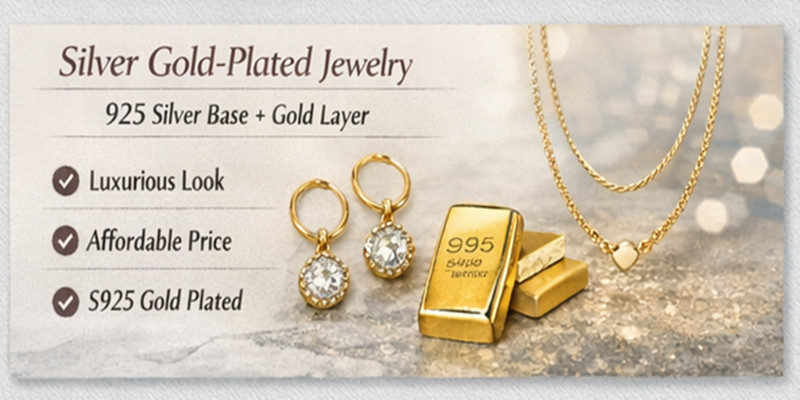
3. Silver Gold-Plated: The Affordable Luxury Alternative
Silver gold-plated jewelry (also called “vermeil” in some markets when meeting specific standards) combines the best of both worlds: a sterling silver base overlaid with a thin layer of genuine gold through electroplating. This creates jewelry with gold’s prestigious appearance at a fraction of the cost—typically 1/10th the price of solid gold pieces with a similar appearance.
Value Determination
The durability and value of gold-plated silver hinges critically on plating thickness:
Nano-plating (0.1-0.3 microns): Despite minimal thickness, advanced nano-technology creates surprisingly durable surfaces capable of withstanding 50,000 friction cycles with minimal wear
Standard plating (2-5 microns): The most common commercial grade, maintaining appearance for 1-2 years with regular wear
Economy plating (under 0.5 microns): Budget-grade plating lasting only 3-6 months; may show wear from simple fingernail scratching
Realistic Expectations
It’s essential to understand that all gold plating eventually wears through—this is physics, not a defect. Friction from clothing, skin contact, environmental exposure, and chemical interactions gradually abrades the gold layer, revealing the silver base beneath. Quality pieces will clearly mark “S925 Gold Plated” and include plating specifications such as “Au-5μm” (5 microns of gold), distinguishing them from inferior copper-based gold-plated items.
Understanding the Differences at a Glance
| Comparison Factor | 925 Sterling Silver | 999 Fine Silver | Gold-Plated Silver (925 base) |
| Silver Content | 92.5% | ≥99.9% | 92.5% (base layer) |
| Mohs Hardness | 2.7-3.0 Medium-High | 2.5-2.7 Soft | 2.7-3.0 (base layer) Medium-High |
| Primary Advantages | High durability, design versatility, and long-lasting | Maximum purity, hypoallergenic, symbolic value | Gold appearance, high cost-effectiveness |
| Ideal Scenarios | Daily wear, stone settings, intricate designs | Gift-giving, collection, simple designs, sensitive skin | Fashion coordination, temporary accessories |
| Appearance | Cool silver | Bright white | Gold finish |
| Tarnishing/Wear | Moderate tarnishing rate | Rapid tarnishing (due to purity) | The gold layer gradually wears to expose the silver |
| Skin Sensitivity | Low | Very Low | Depends on plating |
| Typical Markings | S925, 925, Sterling | S999, 999, Fine Silver | S925 Gold Plated, Au-5μm |
| Price Range | Moderate | Moderate-High (by weight) | Low-Moderate |
Practical Selection Guide – Choosing Without Mistakes
1. Selection by Intended Use
Daily Wear & Fashion Coordination
Choose 925 sterling silver for versatile, durable pieces that withstand frequent wear. Its hardness resists deformation in daily activities, while its design variety offers options for professional settings, social occasions, casual wear, and active lifestyles.
Gift-Giving & Collection
Select 999 or 9999 fine silver when symbolism matters. High purity signifies purity, sincerity, and value—perfect for newborn longevity locks, elder bracelets, wedding gifts, and commemorative pieces. Investment-grade silver bars also favor maximum purity.
Achieving Gold Aesthetics on Budget
Gold-plated silver offers an economical solution. Prioritize pieces with plating thickness ≥2 microns, and verify that reputable sellers offer re-plating services to extend lifespan.
Sensitive Skin Concerns
Fine silver provides the safest option. If you prefer 925 sterling silver designs, verify “nickel-free alloy” certification to minimize allergic reaction risks.
2. Three Critical Tactics to Avoid Purchasing Pitfalls
Examine Hallmarks
Authentic silver jewelry always bears clear, crisp markings stamped into the metal. Absence of hallmarks or illegible stampings suggest counterfeit or low-quality alloys. Learn to distinguish “S925” (silver) from “Au” (gold) markings—beware of deceptive terminology like “925 gold,” which is meaningless; S925 refers exclusively to silver content and has no relationship to gold.
Assess Quality
Premium silver jewelry displays smooth, lustrous surfaces with refined finishing—no rough burrs, uneven texture, or visible imperfections at edges. Gold-plated pieces should feel substantial in hand (confirming silver base, not lightweight copper), show uniform plating without bubbles or thin spots, and produce clear, bright sounds when gently tapped (dull, plastic-like sounds indicate inferior materials).
Reject Suspiciously Low Prices
When deals seem too good to be true, they usually are. Consider raw material costs: fine silver currently trades around $6 per gram; finished jewelry priced below $8/gram almost certainly contains insufficient silver content. Gold-plated silver pieces under $50 typically feature inadequate plating that wears through within weeks.
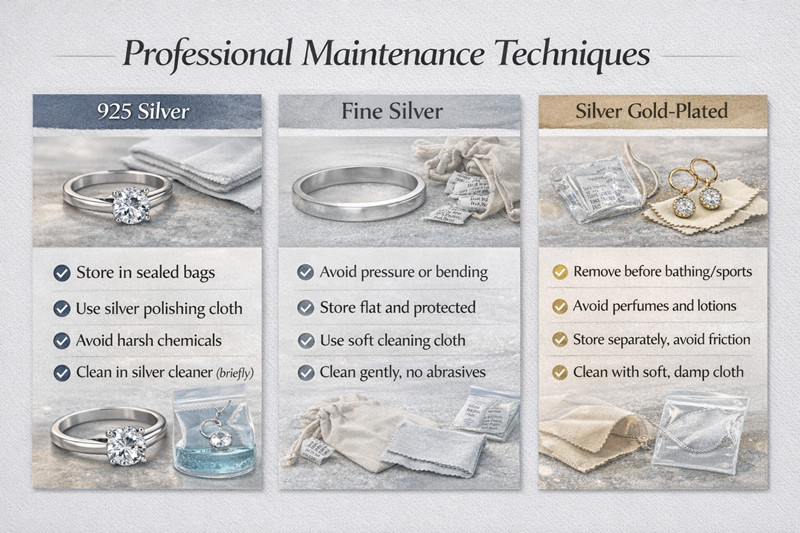
Professional Maintenance Techniques – Extending Jewelry Lifespan
925 Sterling Silver Care
Avoid contact with perfumes, seawater, chlorine, household cleaners, and sulfur-containing substances
Polish monthly with specialized silver polishing cloths to remove light tarnish
For heavily tarnished pieces, use silver dip solutions (maximum 1-minute immersion to prevent over-cleaning)
Store separately in sealed bags or anti-tarnish pouches when not wearing
Remove before swimming, bathing, exercising, or sleeping
999 Fine Silver Care
Handle gently to avoid bending or deformation, which is difficult to reverse given the metal’s softness
Store in sealed containers with oxygen absorber packets for long-term preservation
Clean only with soft, lint-free cloths using gentle circular motions
Never use abrasive materials, steel wool, or harsh chemicals that could scratch the soft surface
Embrace tarnish as authentication of purity; restore luster with gentle polishing
Gold-Plated Silver Care
Apply all cosmetics, lotions, and perfumes 15 minutes before wearing jewelry to allow products to dry completely
Remove during swimming, bathing, heavy perspiration, and strenuous activities
Clean periodically with soft brushes and mild neutral soap solutions; rinse thoroughly and dry completely
Store individually in sealed bags with silica gel packets to prevent moisture exposure—this can extend lifespan by 30%
Address wear spots with gold touch-up pens for temporary solutions, or seek professional re-plating services for comprehensive restoration
Frequently Asked Questions
Q1: Does fine silver cause more allergic reactions than 925 sterling silver?
A: Quite the opposite. Metal allergies typically result from nickel-containing alloys, particularly in 925 sterling silver’s copper mixture. Fine silver’s extreme purity makes it exceptionally hypoallergenic—the safest choice for sensitive skin.
Q2: Does tarnished silver indicate poor quality?
A: Absolutely not. Silver oxidation is a natural chemical reaction to sulfur compounds in air—not a quality defect. Ironically, higher-purity silver tarnishes more quickly, making tarnish somewhat indicative of authenticity. Regular polishing or silver dip treatments easily restore original luster.
Q3: Can I still wear gold-plated jewelry after the plating wears off?
A: Certainly. The exposed 925 sterling silver base remains fully wearable, and many people appreciate the “antique” or “oxidized” aesthetic. Alternatively, professional replating or polishing can restore the gold appearance or transform the piece into a polished silver design—essentially giving your jewelry a second life.
Q4: How can I tell if my silver jewelry is authentic?
A: Genuine silver jewelry will bear clear hallmark stamps (S925, 999, etc.), feel appropriately weighted for its size, tarnish naturally over time, and may be tested with acid testing kits available at jewelry supply stores. When purchasing, buy from reputable retailers who provide authenticity certificates and return policies.
Conclusion
Whether you’re drawn to the versatile elegance of 925 sterling silver, the pure significance of 999 fine silver, or the affordable luxury of gold-plated silver jewelry, understanding each material’s “identity certificate” empowers you to make selections aligned with your needs, budget, and values. Armed with knowledge about composition, characteristics, selection criteria, and maintenance requirements, you can navigate jewelry stores with confidence, avoid common pitfalls, and invest in pieces that will accompany you through countless beautiful moments.
The key lies not in declaring one type superior to others, but in matching the right material to your specific circumstances—your skin sensitivity, wearing habits, aesthetic preferences, budget constraints, and symbolic intentions. With proper selection and conscientious care, quality silver jewelry becomes not just an accessory but a lasting companion through life’s memorable occasions.
